
‘It Shouldn’t Be This Confusing’: Rachel Strauss on Fixing Drug Pricing, Empowering Patients, and Building a Healthcare System That Works
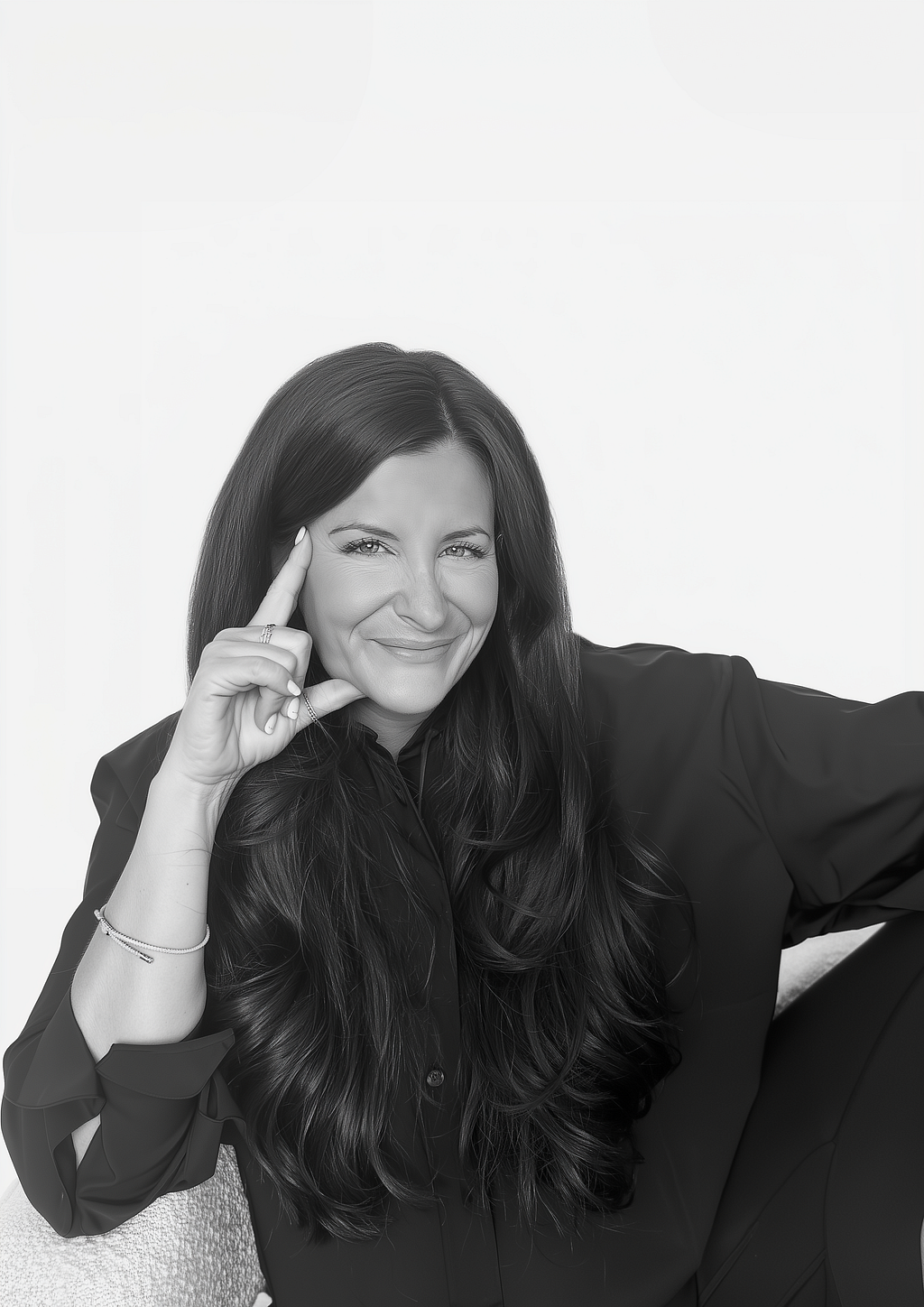
“I believe everyone has something to give every day — whether it’s your time, a few extra dollars, or advice to someone who’s where you once were. If we all made daily giving a habit, the world would shift. You don’t have to wait for the government or some big initiative. Just decide that you’re going to help someone, no strings attached. When you do that, it always comes back around.”
I had the pleasure of speaking with Rachel Strauss. Rachel Strauss grew up outside Detroit, the child of a physician father and a pharmacist grandfather, in a family where service was not a slogan but a rule. “I was brought up as a woman of faith with the belief that we take care of people,” she says. “Whether that means helping someone through a bad day or using something in your own network to make someone else’s life better.” She headed to Michigan State planning to be pre-med, then found herself pulled into the newsroom at the State News. Reporting felt natural. She liked meeting people, listening, and building a story from a life. The plan became New York, a science beat, maybe The New York Times. Then she graduated in 2001, the year of 9/11, and the move did not feel right.
Instead, she stepped into a corner of healthcare few outside the industry understand. Her stepmother asked if she could help at a small pharmacy benefit manager, a PBM. Strauss walked in to file paperwork “for a few days” and never left. She was employee number 11 in 2002. What began as a temporary job turned into a 23-year run that carried her from pricing analysis to consultative sales, from learning why drugs cost what they do to steering relationships with employers and brokers. By the time the company sold to a larger organization during the pandemic, there were about 200 employees serving close to 3 million people.
The pandemic also changed her voice. Grounded from travel, she went to social media and podcasts to keep pushing the message of affordability and access. Someone on a show dubbed her the “PBM Princess.” She kept the title, with a caveat. “The word ‘princess’ to me isn’t just about being a woman or loving pink,” she says. “It’s more about the responsibility that comes with any title. My mission has always been to find ways to make healthcare more affordable.”
Strauss built that mission outside the office too. For nearly 15 years she has been a lay leader and fundraiser, chairing events and sitting on nonprofit boards. That work sharpened a point of view about value and urgency, and it set the stage for her own firm, PBM Princess, LLC, where she consults with employers, partners with brokers she trusts, and backs innovation that lowers costs. She puts it in three lanes. Patients come first. “I’m always the person people call when they need help,” she says. Then come employers, the payers for a majority of Americans outside Medicare. Finally, she works with companies that can cut prices and widen access, citing IL Meds in Israel, which she says can ship the same medications used in the U.S. for a fraction of the cost.
Her stories point to a theme. Early on, her then-company built Project Hesed with a Midwestern nonprofit that had grant funding but no roadmap. The team leaned into generics and local pharmacies, and they found ways to handle high-cost specialty drugs. “In trying to solve for these few thousand people, we were actually uncovering a strategy that could help millions,” Strauss says. The program saved millions of dollars and inspired similar models across the country. Another example she cites is an Austin outfit built for independent contractors, proof that new forms of coverage can work if people know where to look.
She is open about the errors that taught her to slow down. As a young rep she printed open enrollment packets for the wrong client with a near-identical name. She walked into the meeting confident and instantly realized the materials were wrong. “People are incredibly gracious when you admit you made a mistake,” she says. The lesson was simple. Accept help. Own the missteps. Keep going.
In recent years Strauss has pushed hard on women’s health, especially menopause and midlife, which she says have been ignored by training and policy. She remembers telling her husband she planned to talk openly on TikTok and Instagram about perimenopause. “He said, ‘You can’t talk about menopause.’ And I was like, ‘Why not?’” She wants physicians to ask more questions before writing an antidepressant, including whether a woman’s hormones should be checked. She argues for openness to alternative therapies in partnership with doctors, and for honesty about the forces that shape clinical decisions. The point, for her, is the right drug at the right time, and a system that does not make women feel invisible.
Ask her how to rebuild pharmacy benefits and she reaches for a simple analogy. A credit card is a transaction. You know the rate, the parties, the decision points. “With pharmacy, there are so many layers,” she says. Strip it down to doctor, medication, and price transparency, give people choices, and let buyers understand what they are paying for. The change, she adds, will need everyone. Employers can leave the big brand names and still offer better coverage, if they educate their teams. Government can enforce guardrails, especially as lawsuits test fiduciary duties. People need to learn how to use the benefits they have and speak up when the system fails them.
Her personal rules are spare. “It’s okay to dream and to want more out of life.” Trust your gut. You are not “too much” if you are in the right room. Guard your reputation. And it really is better to be a morning person.
If she could spark one movement, it would be daily giving. “Everyone has something to give every day,” Strauss says, whether that is time, a few dollars, or advice to someone a step behind. The idea tracks with the way she has tried to work, a Detroit kid who planned on journalism and ended up inside the circuitry of drug pricing, still looking for ways to make the whole thing fair.
Yitzi: Rachel Strauss, it’s a delight and an honor to meet you. Before we dive in deep, our readers would love to learn about your personal origin story. Can you share with us the story of your childhood, how you grew up, and the seeds for all the great things that have come since then?
Rachel: Absolutely. I’m originally from the Detroit area, and I’ll always be proud to say that I’m from Detroit. I went to college at Michigan State University. My father’s a physician, my grandfather was a pharmacist. I was brought up as a woman of faith with the belief that we take care of people. It’s just who I am — whether that means helping someone through a bad day or using something in your own network to make someone else’s life better. That’s always been at my core.
From there, I went to college thinking I’d be pre-med. But after two years of science classes, I realized I didn’t love it. I found a passion for journalism instead and worked at the student newspaper, the State News. It was actually a pretty big publication. I discovered how much I loved interviewing people, learning about their lives, and being a feature reporter.
I graduated with plans to move to New York and become a reporter. My dream was to work for The New York Times. On Tuesdays, they have the science section, and I thought, “I’ll be a healthcare reporter — this is how I’ll tie it all together.” But I graduated the year of 9/11, and I just wasn’t in an emotional place to make a big move from Detroit to New York. I decided to wait a year.
At the time, I was freelancing for a Gannett newspaper and not working much. My stepmom owned a pharmacy benefit manager company — what’s called a PBM. PBMs are a part of everyday life that most people don’t even know about. It’s kind of like a mortgage — you don’t really understand it unless you’re in it. Honestly, I have a mortgage and still don’t fully understand how it works!
PBMs are the part of healthcare that pay for prescriptions. When you go to the pharmacy and pay your copay or the full amount if you’re in a high-deductible plan, there’s someone else — usually the PBM — who’s paying the rest. That’s their function. I had no idea what that meant at the time.
My stepmom’s business was growing fast, and she asked if I wanted to come in and help file paperwork for a few days, just to get used to going to work as a college graduate. And to make a long story short — I never left. I was employee number 11 in 2002.
I started on the numbers side of the business, learning what makes prescriptions cost what they do and understanding the role Pharma plays in the actual expense of medication. I eventually moved into sales. But because it wasn’t a physical product, it naturally became more of a consultative approach.
I stayed with the company for 23 years. We were eventually acquired by a larger organization during the pandemic, which was a strategic decision. My stepmom saw it as a way for the company to grow. By the time we sold, we had 200 employees and were serving close to 3 million people.
During the pandemic, I got really bored because I couldn’t travel. So the only way I could continue my messaging was through social media. I did a lot of podcasts during that time, and because, as you can see, I have pink doors and I’m a woman in the industry, I somehow got the nickname “PBM Princess” on a podcast.
The word “princess” to me isn’t just about being a woman or loving pink — it’s more about the responsibility that comes with any title. My mission has always been to find ways to make healthcare more affordable.
Where I’m at today, a big part of my journey has also been my work as a lay leader. I’ve spent close to 15 of my 20 professional years involved in nonprofit leadership. When you’re not the owner of a business and you have entrepreneurial spirit, the only way to channel it is through extracurricular activities. For me, that meant sitting on boards, chairing events, and fundraising.
When you fundraise, you really learn the value proposition of a mission. And that experience helped me realize that I wanted to work for myself — to represent and evangelize for companies I believe in that are doing the right thing, and to find ways to connect them to consumers.
For me, there are really three types of consumers. First, always, is the patient. I’m always the person people call when they need help. Even if it doesn’t make me any money, I’m going to help them. That’s what I’m doing right now with Brandi Glanville. Someone introduced us, she needed help, and I had the resources and people to assist her. We’re working through some unfortunate hurdles she’s faced in the healthcare system.
Second, the way I make money — because I have to, in order to continue giving and helping — is through employers. People don’t hear this enough, but employers, CEOs, CFOs, and HR leaders are how we’re going to change healthcare in America. They’re the ones purchasing healthcare for their employees, and that population makes up over 70% of the insured in this country, outside of Medicare. Those are the clients I work with. I’m not a broker, but I partner with brokers who do the right thing. I work as a consultant to help find better solutions.
Third, I work with anyone doing something innovative that saves money. For example, I work with a company called IL Meds in Israel. They’re able to provide the same medications we use here in the U.S., sometimes for 70 or 80% less. They ship them directly, and the business supports a cause that’s important to me — supporting Israel and helping people afford their medications.
I also support innovation through technology and education. That’s why I launched PBM Princess — to bring these solutions to the forefront and continue my mission of helping people.
Yitzi: You probably have some amazing stories from your career helping all these people. Can you share with our readers one or two stories that stand out in your mind from your professional life in this capacity of helping people get more affordable healthcare?
Rachel: Yes. One of them actually comes from the early days of the company my family started. We were approached, probably right when I had just started, by a nonprofit organization in the Midwest that had received a grant to support a large population of uninsured people. This was before the ACA, before the government really stepped in to help, and it became a huge lesson for me — first in helping people, and second in how entrepreneurialism can come from simply doing the right thing.
This organization came to my former employer and said, “We have a set amount of money, and we need to help three or four thousand people get access to healthcare, specifically prescriptions.” So, we had to build a program from scratch. The program focused heavily on low-cost generic drugs and working with local community pharmacies to get the best prices. But we also had to figure out how to handle specialty medications, which are those really expensive biotech drugs that can cost thousands of dollars a month.
We spent time researching what kind of programs existed and how we could support this population. And what we didn’t realize at the time was that in trying to solve for these few thousand people, we were actually uncovering a strategy that could help millions. Even when someone isn’t facing an economic crisis, if you take the time to figure out how to help one person, you can end up creating solutions that scale.
That program was called Project Hesed. The organization actually gave my former employer an award for the work we did. We saved them millions of dollars and were able to get access to medications for so many more people. That program evolved and, in fact, inspired probably 30 other companies across the country to create similar models.
It taught me that the phrase “no good deed goes unpunished” isn’t always true. In fact, the opposite can be true — if you do things for the right reasons, and not just to make money, the rewards will come, and they’ll come the right way. That’s one story that really stands out.
Another story I think is important comes from a company I know in Austin. They also did the right thing by focusing on people who had either lost their jobs or couldn’t afford healthcare. They built a business model specifically for independent contractors or people with 1099 status and created a kind of health share program to help them better navigate the system.
It’s all about knowing where to turn. And the truth is, Google and AI still haven’t made health insurance any easier to understand. There’s a lot of innovation out there right now, but you have to be willing to look beyond the big names. We’re entering a new era of healthcare where how we pay for care is changing. It’s not just about Blue Cross Blue Shield or UnitedHealthcare anymore. There are new, creative, more affordable options out there — you just have to be open to them.
Yitzi: It’s been said that sometimes our mistakes can be our greatest teachers. Do you have a story about a funny mistake that you made when you were first starting your career and the lesson that you learned from it?
Rachel: Yes. Details matter.
I was doing what’s called open enrollment meetings — those sessions where someone comes in to explain employee benefits, like your deductible, copays, and so on. I wanted to handle everything myself because I was still training and eager to prove I could do it. I insisted on printing all the materials and managing the prep on my own.
We had two clients with very similar names — one was a private company called Consumer Equities, and the other was Consumer Electronics or something along those lines. I ended up printing all the materials for the wrong company. I showed up completely confident, only to realize I had brought the wrong packets, the wrong branding, the wrong everything. I was totally embarrassed.
The worst part? I didn’t want anyone to help me because I wanted to do it all myself.
The lessons I learned were huge. First, it’s okay to accept help, even when you’re trying to prove yourself. Second, people are incredibly gracious when you admit you made a mistake and don’t try to blame someone else. When you take ownership, people respect that. And third, you get through it. There’s always another day.
Yitzi: Beautiful. So let’s talk more about your work. From what I’ve read, you’ve made women’s health — particularly menopause and midlife — a central focus of your advocacy. Why do you think this has been historically under-addressed in pharmacy benefits?
Rachel: I think it’s been under-addressed because there just haven’t been a lot of protocols in place for women’s health, and for a really long time, it was considered taboo.
I’ll be honest — I became somewhat of a LinkedIn influencer, and my goal has been to transfer that presence over to TikTok and Instagram, just from an educational standpoint. I remember telling my husband that I was going to start talking publicly about menopause, and he was so embarrassed. He said, “You can’t talk about menopause!” And I was like, “Why not?”
I’m 45 — about to be 46 — and I’m in what’s called perimenopause. I told him, “When I was pregnant, we posted pictures and talked about that. Why is this any different? It’s just another phase of life.” He was worried about guys at the gym saying, “I saw your wife talking about her women’s health on Instagram.” But that reaction made me realize just how taboo this topic still is — and that’s a big part of the problem.
I also think it’s something physicians have historically avoided. It’s easier to put a Band-Aid on it. Speaking for myself, I’ve noticed emotional changes at this stage of life, and doctors are often quick to prescribe antidepressants without first asking, “Where are your hormones at?” or “Should we check your levels?” There’s not enough deep understanding or curiosity around it.
Because my passion is rooted in access and affordability, part of what I care about is making sure people get the right drug at the right time. And that includes being open to alternative therapies. For example, it’s legal in 38 states to medicate with cannabis. I’m not saying people should self-medicate, but I do believe in doing things in partnership with physicians — while also being aware of who or what is influencing the science behind their decisions.
To answer your question fully, with women’s health specifically, not enough is being done. I don’t have the exact stat offhand — we can definitely send it for the article — but there’s only a very small portion of medical school education, even for gynecologists and urologists, that covers this phase of a woman’s life. They’re just not trained in it.
And it’s wild to me because women in this phase represent such a large and growing population. With advances in longevity, we’re living longer, and many of us are still actively raising families, working full-time, and managing households. You’re seeing this topic finally gaining traction in the broader market — consumer products, books, conversations — it’s starting to show up everywhere.
We’re a demographic that’s done buying diapers (well, most of us!), and many of us have elementary or older-aged children. We’re in the workforce. We have disposable income. And we care deeply about living long, healthy lives — because many of us, like me, still have young kids. My children are in elementary school, whereas at my age, my parents were already sending me off to college.
We’re committed to longevity, we want to take care of ourselves, and we want the healthcare system to do the same. It’s important that we start addressing the needs of women who look like me and live lives like mine.
Yitzi: I know this is a big question, but if you could reimagine the pharmacy benefit system from scratch, what would it look like?
Rachel: Oh, it’s a huge question, and it’s a project I’m devoting a tremendous amount of time to. I believe it should be different — the motivations need to be different. Right now, what’s happening in our country, and who’s motivating the payer side, is all wrong. It should be a transaction.
I have a credit card, right? American Express doesn’t care what merchant I go to. They have a rate, and I’m sure based on the volume of transactions, they pay different percentages. That’s between the merchant and American Express. But I can use it, I know what my cost is, and I know where the influence lies. Some places may say, “We’re not taking American Express,” for whatever reason.
But with pharmacy, there are so many layers. I’ve been in the business, Yitzi, for about 24 years, and I still learn new things every day, because there’s always someone else you find out was influencing the system. If you’re going to recreate it, it should just be doctor, medication, and understanding the cost behind it. It should include alternatives too, like options.
Just like shopping — if you want a nicer watch, you know what brand you’re paying to have on your wrist. You also know that something less expensive might do the same thing, and that becomes your choice as a consumer. But with the amount of resources that go into healthcare — from the employer side, the government side, the taxpayer side — when you look at Medicaid, Medicare, and people living below the poverty line, it should be a much more level playing field. And it’s not.
Yitzi: So that’s the vision. What needs to happen? Which levers need to be pushed to move in that direction? Does it come from Congress, big corporations, or grassroots movements?
Rachel: Yes, everybody.
I use UnitedHealthcare a lot in this example because it parallels what’s happening on the pharmacy side. People are angry. People are mad. We just had a travesty about a year ago. The CEO of UnitedHealthcare was murdered, and the response, no matter which side of the political fence you’re on, was unreal for a contemporary society. It felt like something out of Lord of the Flies.
That kind of response is happening because people are angry. And yet, if an employer removes UnitedHealthcare and replaces it with something else — even something better — employees still react badly. I work with an amazing company, and I’ll give them a shoutout: Coastal Administrative Services. They’re based in Washington State, and they actually offer better benefits with less out-of-pocket costs than UnitedHealthcare — for a lower overall cost.
But if people lose the “UnitedHealthcare” name, they immediately feel like, “This sucks. We have terrible insurance.” And it’s like, no, you don’t. You’re just not educated about how this works. That new plan is just the one paying the bill. What you really need to know is what you have to pay.
So, first and foremost, we need employers to say, “We don’t have to stick with Blue Cross Blue Shield or UnitedHealthcare.” In fact, if we leave those big names, we might actually become a better company.
The second thing is the games being played. You’re hearing about it now — there are lawsuits. Employees are suing their employers for fiduciary breaches. It’s all over mainstream news. That’s where we need the government to step in.
Thankfully, we’re starting to hear movement. I’m actually grateful it’s been happening across the last two administrations. And without getting political, they couldn’t be more different from each other. But there’s enough bipartisan support on both sides to at least start saying the right things.
I think it’s going to continue, but we need more Americans — like Brandi, honestly — to be outraged about how the system failed them, and also to understand how to use the benefits they’re given. That’s the other piece. It’s confusing, and it shouldn’t be as confusing as it is.
Yitzi: Amazing. This is our signature question. You’ve been blessed with a lot of success. Looking back to when you first started, you must have learned a lot from your experiences. Can you share five things you’ve learned that would’ve been really helpful to know back then? Five things you wish you knew when you first started.
Rachel:
- Number one, it’s okay to dream and to want more out of life.
- Number two, gut instinct is almost always right.
- Number three, you are never “too much.” If someone thinks you are, they might not be right for you — and that applies in all areas of life.
- Number four, you only have one reputation. Respect it. I didn’t not know that, but it’s advice I’ve come to really understand the importance of.
- And number five, that it really is better to be a morning person.
Yitzi: This is our final aspirational question. Rachel, because of your amazing work and the platform you’ve built, you’re a person of enormous influence. If you could put out and spread an idea or inspire a movement that would bring the most amount of good to the most amount of people, what would that be?
Rachel: I could answer this in a lot of different ways. Probably a movement around giving back. The more we take care of each other and make other people a priority, the more it comes back to us.
And if we all do it at an individual level, we don’t need — well, I was going to say something political, but I’ll skip that. The point is, we don’t need to wait for the government or for someone else to do it for us. If everyone’s giving back, then when we’re the ones in need, the universe is already out there working for us.
I believe everyone has something to give every day — whether it’s time, an extra dollar instead of the latte, or advice to someone who’s where you once were. Make it a point, daily, to do something that serves someone else with no agenda for yourself.
Yitzi: Rachel. I’m excited to share this with our readers. I wish you continued success, good health, and everything good.
Rachel: Oh my God, this was amazing. Thank you.
‘It Shouldn’t Be This Confusing’: Rachel Strauss on Fixing Drug Pricing, Empowering Patients, and… was originally published in Authority Magazine on Medium, where people are continuing the conversation by highlighting and responding to this story.