
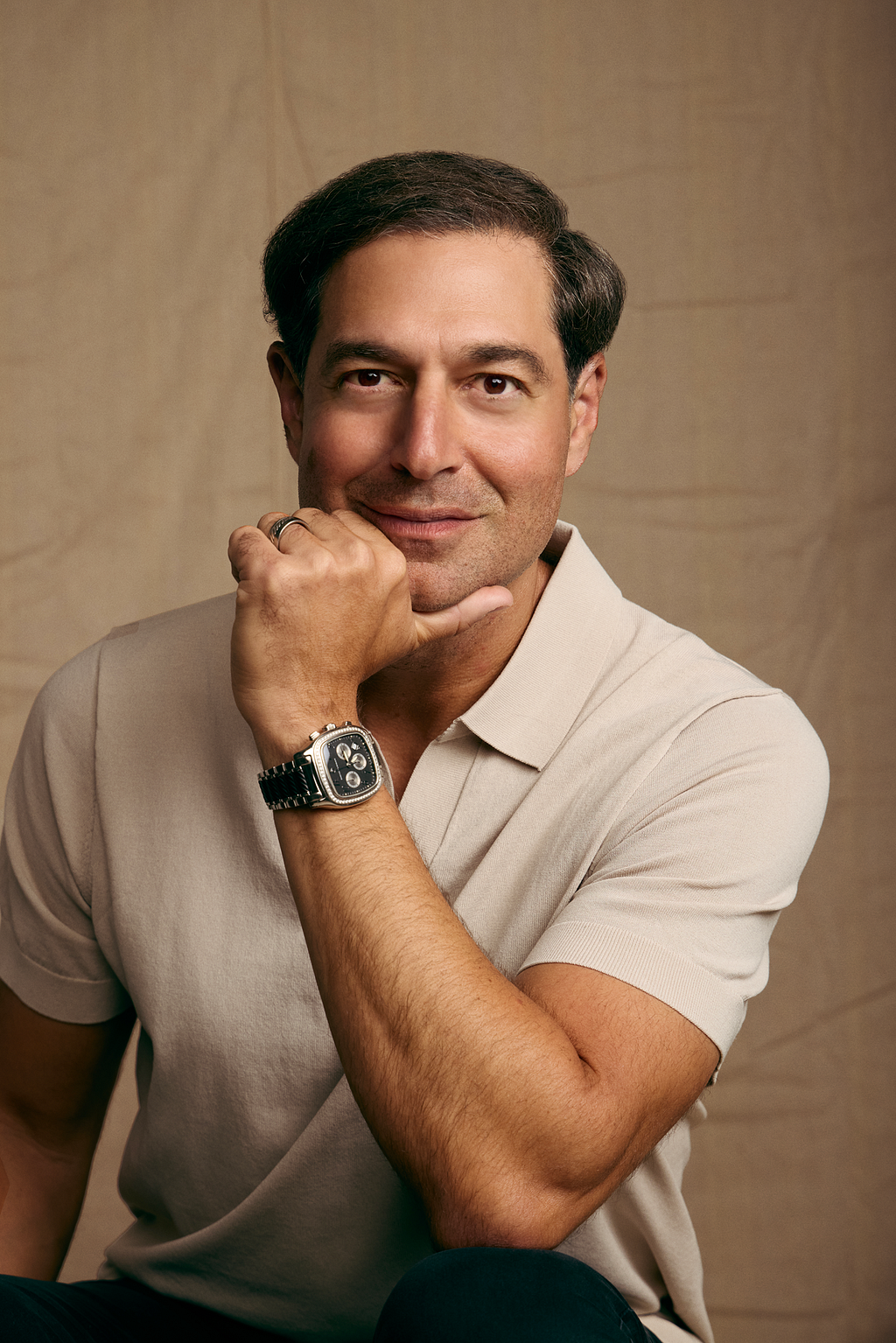
“Whether someone is religious or not, these principles are rooted in history and proven over thousands of years. But if you are a person of faith and believe your body is a temple of God, there’s even more reason to view physical health as a spiritual responsibility. That’s really the heart of The Biblio Diet.”
I had the pleasure of talking with Jordan Rubin. Jordan, a prominent figure at the intersection of faith and wellness, rose to national attention in the early 2000s with “The Maker’s Diet,” a bestselling book that chronicled his recovery from Crohn’s disease through a regimen inspired by biblical dietary principles. Branded as “America’s Biblical Health Coach,” Rubin has since become a leading voice in the natural health movement, blending scriptural interpretation with modern nutritional science. His personal story, from near-death illness to wellness entrepreneurship, has fueled a career that spans more than three decades, multiple bestselling books, and several high-profile ventures.
Born in the 1970s to parents who embraced naturopathic principles long before they were mainstream, Rubin was raised in a household that emphasized organic food, herbal remedies, and home births. His father trained at what is now the National University of Natural Medicine in Portland, Oregon. This upbringing laid the groundwork for the philosophy that would later define his professional work.
Rubin’s life took a dramatic turn at age 19 when he was diagnosed with advanced Crohn’s disease. Over the course of two years, his condition deteriorated rapidly, his weight dropped to 104 pounds, and medical interventions did not bring improvement. After trying many approaches across various disciplines, Rubin encountered a nutritionist who suggested a diet based on biblical food laws: organic, unprocessed meats, raw dairy, fermented vegetables, and produce grown without chemicals. Rubin credits this shift with restoring his health over a 40-day period, a transformation he later chronicled in “The Maker’s Diet,” published in 2004.
The book found a wide audience, resonating with readers seeking alternatives to both the pharmaceutical model and fad diets. Its structure, divided into a phased plan reintroducing different food groups, was anchored by three principles: eat what was originally created as food, don’t overly modify it, and avoid making food into an idol. Rubin’s appeal lay not just in his personal recovery but in his ability to frame health as a spiritual calling, particularly for Christian and Jewish readers.
Following the book’s success, Rubin became a prolific author, eventually penning or co-authoring over 30 titles focused on topics such as gut health, fasting, and holistic immunity. He also emerged as a major player in the health food industry. He co-founded Garden of Life, a supplement brand that quickly gained traction in the natural health market, later acquired by Nestlé. He went on to launch Beyond Organic and Ancient Nutrition, both of which emphasized whole-food-based supplements, probiotics, and collagen products. These ventures were supported by another of Rubin’s passions: regenerative agriculture.
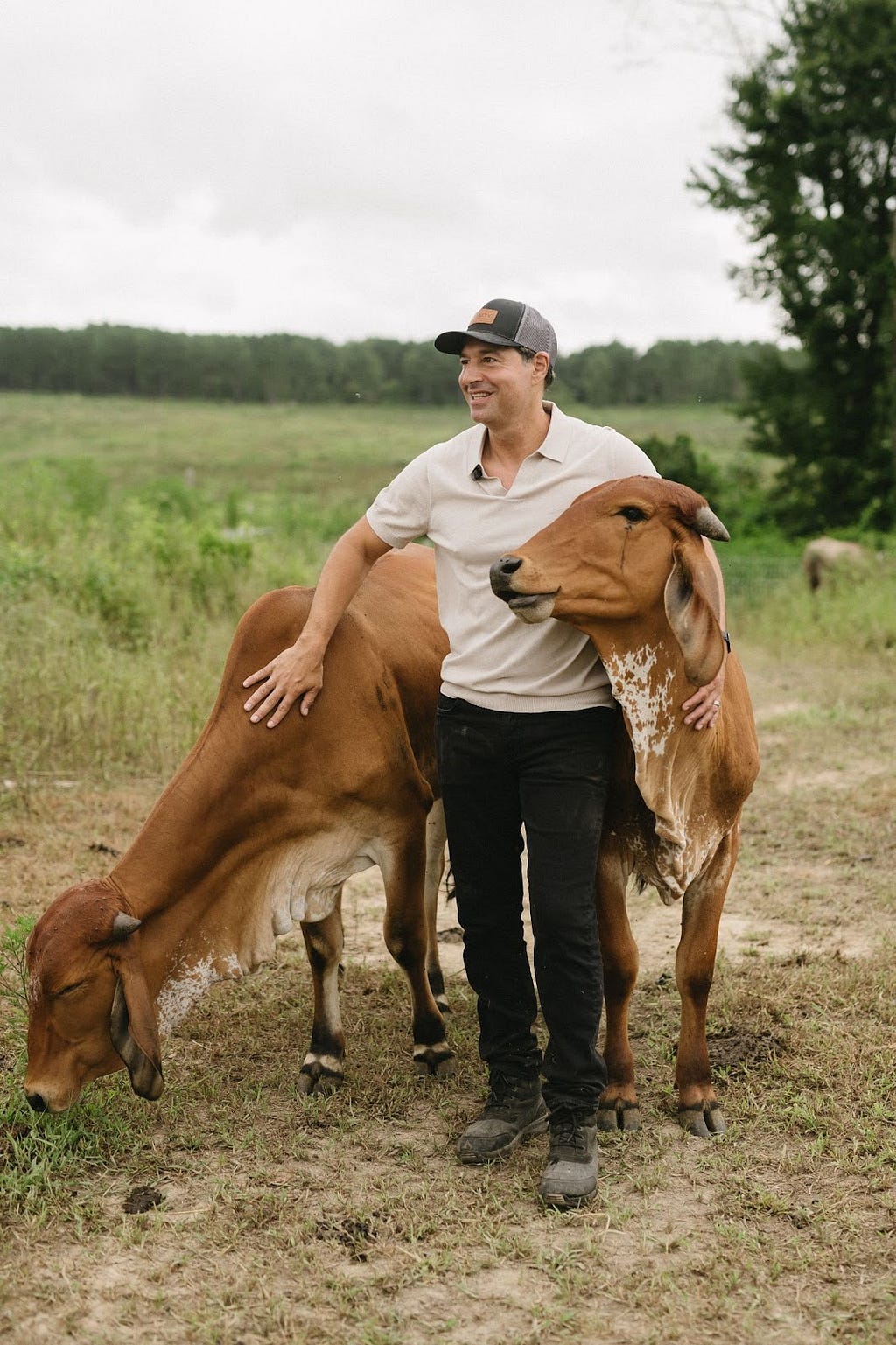
Operating farms in Tennessee and Missouri under the name Heal the Planet Farm, Rubin has become an advocate for regenerative, permaculture-based farming. His properties are used not only to grow nutrient-dense ingredients for his products but also to conduct educational initiatives focused on soil health and sustainable land use. The farms have planted more than 600,000 fruit trees, and Rubin sees agricultural restoration as a vital component of human health and spiritual stewardship.
Rubin’s emphasis on “biblical nutrition” has drawn attention and strong interest. While he does not advocate kosher eating in the traditional sense, his dietary philosophy excludes what he terms “detestable animal things,” a category that includes pork, shellfish, and scavengers, drawing directly from passages in Leviticus and Deuteronomy. He also cautions against processed seed oils, artificial sweeteners, and over-refined grains, contrasting them with traditional foods like fermented dairy, grass-fed meats, olive oil, and long-fermented sourdough breads.
In later years, Rubin expanded his work into fasting protocols and “healing leaves”, a concept he introduces in “The Biblio Diet,” his latest book. Drawing from verses in Ezekiel and Revelation, he promotes tea made from fruit tree leaves as a medicinal practice supported by both scripture and emerging research. He considers the leaves a neglected resource with potential to support health and address chronic diseases, including cancer, which Rubin himself battled and overcame in 2008.
In interviews, Rubin describes a daily routine that includes overseeing animal rotations, experimenting with soil composition, and developing new formulations for supplements and teas. He often speaks about physical health as an extension of spiritual responsibility, a message that has found a devoted following in religious and natural health communities.
His influence is seen in the growing number of people who view diet not only through a scientific lens but also a spiritual one. As health discussions increasingly turn toward issues of sustainability, food ethics, and ancestral eating, Rubin’s integration of biblical principles with ecological farming positions him as a significant and distinctive figure in American wellness culture.
Yitzi: Jordan Rubin, it’s an honor and a delight to meet you. Before we dive in deep, our readers would love to learn about Jordan Rubin’s personal origin story. Can you share with us the story of your childhood, how you grew up, and the seeds for all that came afterward?
Jordan: Absolutely. I was born to, I like to say, a couple of hippie health nut parents. My father was very early into natural medicine. He was a student at what is now National University, which was the first naturopathic medical college in the second half of the last century, in Portland, Oregon. That’s where I was born, at home. My parents were very much, I’ll say, enlightened in natural health. I wasn’t immunized or vaccinated, and I ate generally well, following natural health principles.
This was during the seventies and eighties, when natural health and organic living were not cool at all. It was tough being a kid eating foods that people didn’t like or even made fun of. Today, especially with you being from LA, Yitzi, there’s Erewhon Market, Whole Foods, and being into natural foods and health is part of pop culture. But it wasn’t back then. It was very much uncharted territory. We didn’t rely much on conventional medicine growing up.
When I was 18, I started developing symptoms that were eventually diagnosed as Crohn’s colitis, an inflammatory bowel disease. Back in 1994, that was extremely rare. Now, if you watch any sporting event on network TV, you’ll see ads for medicines to treat Crohn’s and ulcerative colitis. So things have definitely gone in the wrong direction.
I had a two-year battle. Conventional medicine failed. I tried 70, seven-zero, natural health experts, doctors, even what I jokingly call lawyers and Indian chiefs. Around my 21st birthday, I was finally able to get well by following a diet that was based on the Bible, proven through history, and confirmed by science. I recovered largely over a 40-day period by eating what we’d now call real foods and avoiding things that are clearly unhealthy.
At that point, I committed my life to helping other people get well, either by avoiding disease or overcoming it. I wrote about my journey in books like Patient Heal Thyself and The Maker’s Diet, and went on to start health and nutrition companies like Garden of Life, Beyond Organic, and Ancient Nutrition.
Believe it or not, after all of that, starting companies, writing books, lecturing around the world, doing media mostly before social media, I was diagnosed with cancer in 2008. It was considered terminal, but I was able to overcome it. Part of The Biblio Diet story includes that cancer journey, which I’m sharing in writing for the first time. There’s also a lot of fresh insight, even though it’s the same Bible that inspired The Maker’s Diet back in 2003.
The Biblio Diet touches on other relevant topics too, because today, in 2025, the tailwinds are stronger than the headwinds when it comes to teaching people how to eat and live. Over the last 22 years, the understanding has really grown that environmental factors are behind most diseases, and people are desperate for this kind of information. There are also many who want to follow a diet aligned with their faith, particularly within the Judeo-Christian community.
That said, a lot of Jewish people don’t follow what we’d call dietary laws, and certainly many Christians don’t either. We’re trying to introduce these principles in a way that’s accessible and health-focused, not about judging or calling food choices sinful, although I have my personal views. The idea is that whether someone is religious or not, these principles are rooted in history and proven over thousands of years. But if you are a person of faith and believe your body is a temple of God, there’s even more reason to view physical health as a spiritual responsibility.
That’s really the heart of The Biblio Diet. The subtitle is designed to speak directly to what people need most: live long, master metabolism, reduce pain, fight depression, and conquer cancer with healing secrets from the Bible.
Yitzi: The approach you’ve taken is beautiful and amazing, looking to the Bible for nutrition. Where did that start? A lot of nutritionists don’t turn to the Bible for guidance in this area. What was your flash of lightning that made you realize this is a place to start for a book on nutrition?
Jordan: Yeah, well, I had already been sick for about a year and a few months, and I’d seen 69 medical experts around the world. My dad met a man in San Diego, I was in South Florida at the time, who told me that if I followed a diet based on the Bible, proven through history and confirmed by science, I could get well.
I read the Bible, not just occasionally, but every day, and I was already a person of faith. So it made sense to me, especially because I had committed that whatever helped me heal, I would share with the world. That part resonated deeply. But up until that moment, I’d never really paid attention to the references to food or nutrition in the Bible. Once that seed was planted, I began to look at it through a completely different lens.
At that point, I had already read hundreds of health books and consulted with some of the top doctors, but this was something different. This was a chance to study the Bible with nutrition in mind. And now, in addition to working in nutrition, I’m a farmer and deeply involved in agriculture. That connection between farming and food is essential to understanding the Bible, because so much of its history, including the feasts and festivals in both the Old and New Testaments, centers around agriculture, eating, and understanding what was considered food and what was considered medicine.
You mentioned the word “revelation.” The Biblio Diet is based on the same Bible that inspired The Maker’s Diet 22 years ago, but I’ve received significant new revelation since then. Even though I read the Bible regularly, it’s amazing how certain things can be hidden in plain sight until the right time. As it says in the book of Esther, “for such a time as this.” That’s how I was drawn to it, and clearly, the message worked in my own life. That’s why I felt called, even back then, to share it with others.
Now, I will say this, the Bible is not a nutrition textbook. But if you apply its principles through the lens of science and history, you start to see why, for example, bread can actually be healthy today, instead of the villain so many modern experts claim it to be. You understand that red meat was perhaps the most cherished food in biblical times, used in celebrations whenever people could afford it. You’ll learn that Abraham, Isaac, and Jacob, two of the three you were apparently named after, lived on dairy products from their flocks. And the dairy they consumed was raw, unpasteurized, and often fermented, not pasteurized, homogenized, or skimmed.
We would have never fallen for the fat-free craze in the 90s if we had read Job 29 more closely. Job, describing the prime of his life as he spoke to God, said the streets flowed with cream and the rocks poured out olive oil. To me, Yitzi, I want cream and olive oil in my life every day. Job was said to be the most prosperous man before his trials, and afterward, God gave him double. If he described the best time in his life with cream and olive oil, I want some of that. We never should have turned our backs on those foods.
This is how I interpret the Bible and how I understand its principles to be relevant today, and even more so in the future.
Yitzi: So I know the details are in your book, and I would encourage our readers to buy it and read it. But in broad strokes, can you tell us, according to the Bible, what are the foods we should have less of and what are the foods we should have more of?
Jordan: Well, let’s start with this. I have two overarching principles when it comes to biblical eating.
Number one, eat what God created for food. That’s really important, and I think our definitions of food are very mixed up today.
Number two, eat that food in a form that’s healthy for the body. You can take something God created, like an apple, and turn it into something the body doesn’t benefit from. You grow it with pesticides, herbicides, fungicides, and chemical fertilizers. Then you peel it, juice it, concentrate it, pasteurize it, and what you’re left with is essentially a glass of sugar. Compare that to eating the whole apple, especially the kind of apple that would have existed historically, probably less sweet with a tougher skin, it’s a big difference.
In terms of what not to eat, I have a list I call the “Deadly Dozen”, and I put the word “food” in air quotes for these.
Number one is what I call detestable animal things. That comes straight from Leviticus 11 and Deuteronomy 14. In Jewish tradition, this falls under kashrut, and in the church, it’s often referred to as “kosher,” but I argue it’s not about being kosher, it’s about creation. God was very clear. In Yiddish, the word traif is used for these animals, the same word used for garbage or filth. In the Hebrew Bible, the word used to describe these animals is the same as the word for human excrement. This wasn’t just a suggestion. These animals are the garbage disposals of the land and sea. So I start there: avoid detestable animal things. That includes pork and shellfish, but also animals like eel, and in some cultures, even skunk, dog, cat, or horse. This flies in the face of some popular diets today like carnivore or paleo, but that’s okay.
Number two, and this isn’t directly from the Bible, but it fits with that second principle, is artificial sweeteners. The ones in pink, yellow, and blue packets. These are synthetic chemicals designed to trick the body into thinking it’s getting something sweet and energizing, but it doesn’t deliver. So the body starts craving more.
Let me give you a biblical example: when Jonathan was fighting in the woods and hadn’t eaten for days, Saul had made a proclamation that anyone who ate would be killed. Jonathan didn’t know that, and he dipped his staff in honey and ate just a little, and his eyes brightened. That meant his energy came back. God created sweet things like fruit and honey to give us quick energy. But artificial sweeteners are chemically based, they harm the gut, and they confuse the body. Instead of satisfying, they increase cravings. It’s a completely backward system.
Number three would be hydrogenated or damaged plant and seed oils that were never meant for human consumption. To contrast that, think about extra virgin olive oil. In biblical times and throughout history, in the Middle East and Europe, olive oil was made by simply pressing olives and letting their natural weight extract the oil. That first-press oil was used in temple sacrifices, for priests, and for anointing. Later pressings were used for topical or industrial purposes.
Today, we take seeds and go through 5 to 10 heavy industrial processes to extract oil that’s nothing like what it came from. These oils are highly damaged, and they damage the body at the cellular level. They’re toxic.
So those are the top three of the Deadly Dozen. I go into others in the book, like sugar and food coloring, but the big three no-nos are:
- Detestable animal things (like pork, shellfish, and other scavengers),
- Artificial sweeteners,
- Damaged, hydrogenated seed oils.
And Yitzi, a lot of people ate all three of those just for breakfast today. We’ve got to remove these toxic substances masquerading as food if we want to get back to health.
Yitzi: You mentioned bread before, and as you know, bread is a main staple in the Bible. What’s the difference between bread as it was meant to be, and the bread we eat today?
Jordan: Well, I heard this once, I can’t claim it as my own, but it stuck with me: “The whiter the bread, the sooner you’re dead.” I think there are so many things wrong with modern bread.
If you look back, especially through a Judeo-Christian lens, Jesus was referred to as the Bread of Life. Bread was used synonymously with food and fruit in the Bible. Several Jewish feasts are based on harvesting wheat or barley. Even the Feast of First Fruits, Yom HaBikkurim, is a grain harvest. So grain, the seeds of grain, were considered fruits.
In biblical times, the way they processed grain involved letting it sit out on the threshing floor, which allowed the seeds to partially germinate. That unlocked nutrients and reduced some of the anti-nutrients like gluten. The way they baked bread was much closer to a sourdough or sour leaven. It was really hard, like the boules you see in France or Europe.
In the New Testament, when Jesus was tempted by Satan after fasting for 40 days, the devil told him to command the stones to become bread. That was because bread back then looked like stones, not like the lifeless, white, fluffy stuff we have today that can sit outside for months and not even attract bugs.
Real sprouted or sourdough bread, especially made with heirloom grains, is becoming more popular and is excellent for your health. When I was overcoming Crohn’s colitis, I ate a German sourdough spelt bread. Spelt is a variety of wheat mentioned in the Bible. It’s less hybridized, and it worked really well for me. Even people with gluten sensitivity can often tolerate long-fermented sour leaven bread, fermented for 24 to 72 hours, because the gluten is almost entirely broken down. It’s similar to how lactose is removed when milk is fermented into yogurt or kefir.
So I believe bread can be really healthy.
And Yitzi, one of my major revelations in the Biblio Diet came when I was walking on my farm in Tennessee. I turned to our farm director and said, “Boy, it would be great to know what we should eat every day.” Then it hit me, Solomon tells us what he ate every day in 1 Kings 4:22–24, I believe.
If Solomon was the richest and wisest man in the world, and all the kings came to hear from him, and he knew about science, animals, and people, he could afford any food in the world. We know he had spices and logs imported, and the Queen of Sheba and others brought him gifts. So he wasn’t limited to just local items.
According to 1 Kings, his daily provisions were grass-fed beef, stall-fed beef, deer, roebuck, choice poultry, meal, and flour. He ate meat and bread every day. This was a man God Himself called the wisest in history. So I call it the “wisest meal on earth.” And if you can afford it, and today, most people can afford decent meat and bread, why not eat it?
Also, those were the only two foods, with a little oil, that the priests consumed during their seven-day ordination.
Now, you look at most diets today, some say meat is bad, some say bread is bad, and a few say both are bad. But nobody says both are good. I’m here to tell you that the right kind of meat, the right kind of bread, and even the right kind of dairy can be excellent for your health. And the Bible said it first.
If you believe in the Bible, you should believe that. And even if you don’t, I’ll convince you through the Biblio Diet, because this is about human anatomy and physiology.
Earlier I talked about pork and shellfish. The reason they shouldn’t be eaten, scientifically, is that they harbor toxins. A pig’s digestive system is different from that of cows, sheep, or goats. It can’t detoxify waste properly.
Same thing with meat in general, you can ruin meat and make it unhealthy, even if it’s beef. But to say saturated fat and red meat are bad for you is just ridiculous. I could give you dozens of examples in the Bible where, whenever someone had an honored guest or the means to do so, they served meat, including Solomon, who ate it every single day during times of peace.
Yitzi: As you know, one of the ideas in the Bible is that animals shouldn’t just be hunted and killed, but should be slaughtered in a humane and gentle way. Does that come into play in your diet, or is that a separate topic?
Jordan: I don’t say that animals need to be slaughtered in a kosher way, mainly because, Yitzi, they usually are these days. In rare cases, they might not bleed out from the appropriate arteries, but for the most part, that’s standard practice now.
I used to have a slaughterhouse with a kosher kill chute, and we followed those methods. But today, even if animals are hunted, the blood is usually drained properly. So I don’t focus on that as much in the book.
Part of the reason is that kosher meat today is often not raised in a healthy way. Unfortunately, it’s not grass-fed or organic. So if I told people to go buy kosher beef or chicken, it doesn’t necessarily mean it was raised well, and that can muddy the message.
Back in the day, they may not have drained the blood as effectively as they do now, but I think most modern slaughterhouses follow similar standards, though they may not use the same blessings, of course. Still, I don’t get into that too much.
However, if you’re going to kill and eat an animal with the blood still in it, that does introduce additional toxins. Some cultures around the world actually drink blood and believe it’s healthy. I strongly disagree with that. The Bible says, “The life is in the blood,” and I take that seriously.
Even though, under a microscope, you might see nutrients in blood, I don’t believe it should be consumed. So yes, it’s important to eat animals that have been properly killed, processed, and drained before consuming them.
Yitzi: So aside from nutrition, what does the Bible say about exercise, overeating, and rest?
Jordan: Well, first of all, the Bible says plenty about rest. “Honor the Sabbath day and make it holy”, rest one day a week, which is very difficult for a lot of us to do.
In terms of exercise, it was more implied than recommended. In both the Old and New Testament, exercise is acknowledged as having some value, but spiritual things are seen as more important. That being said, we tried to track, as best we could, how much walking people in the Bible actually did. In some cases, it could have been over 20 miles a day when they described going from one place to another, “I went to Gilgal,” “I went here,” “I went there.”
The other interesting thing, Yitzi, is that from artwork, both paintings and sculptures, we see that most people in the Bible were portrayed as very lean and muscular. When someone was overweight, it was mentioned. For example, the king of Eglon was called very fat. When Ehud, the left-handed man, drove his sword into his stomach, the fat came over it.
Another example is Eli, who was 90 years old. When he learned his sons were killed and the ark was captured, he fell back in his chair and it broke, because he was fat. Why would they mention people being fat if everyone was fat? They wouldn’t.
Today, you can go to a baseball game, a mall, or a theme park and see, even without hearing the statistics, how overweight we are as a society. But I don’t think that was the case in the Bible. There’s no specific command to exercise or to be lean, but if you eat the way the Bible outlines, including fasting, it would be hard to become obese. I believe people back then were very healthy.
And really, how do you live to be as old as Abraham, Isaac, and Jacob if you’re carrying belly fat that contributes to cardiovascular issues? It’s not easy to do. They had the same bodies we do and lived in the same post-flood environment, though we’ve worsened it quite a bit since then.
Yitzi: Amazing. You mentioned fasting. As you know, in the Bible, there are periodic fasts. What are the benefits of fasting nowadays?
Jordan: I like to look at Isaiah 58 for the definitive benefits of fasting. In that chapter, Isaiah is talking about how people were fasting the wrong way. Then he says, “Is this not the fast I have chosen?” He talks about loosening the bonds of wickedness, freeing captives, and letting your light shine.
So I see fasting as something that helps break addictions, including food addictions. It also allows the body to heal itself because you’re not distracting your immune system with digestion. And of course, it helps you hunger and thirst for righteousness, as the Bible puts it, especially if you’re fasting to deepen your relationship with God.
There’s a great book called Fasting: The Healer Within, which shows that multiple diseases can be cured through fasting. The problem is that fasting isn’t sustainable long-term, whether it’s absolute fasting or water fasting. That’s why we incorporate different types of fasting now, like intermittent fasting.
Intermittent fasting allows you to get many of the same benefits while still eating in alignment with your body’s natural rhythms. Think about it, Abraham and Sarah didn’t stay up late to watch the news or check their phones. They ate when the sun was out. They didn’t eat a big meal in the middle of the day either. They were busy, harvesting, shepherding, cooking, and working.
I even learned this from my grandmother. She was born in what she called Poland, though it’s now part of Ukraine. She told me that if there was breakfast at all, she’d dip a little piece of bread in oil or schmaltz, rendered chicken fat, and run out the door. Maybe she’d grab an apple off a neighbor’s tree. There was no midday meal. Then, they’d eat a bigger meal in the evening before sunset. And this was in a time that already had some technology.
This modern idea of eating a huge breakfast and a big lunch just didn’t exist. People were fighting for their lives. When Abraham had the angelic visitors come to talk about Sodom and Gomorrah, he told Sarah to kill the fatted calf. That wasn’t a five-minute job. It was a full day’s work just to prepare that meal.
So I believe fasting should be a regular part of our lives. Even the word “breakfast” comes from “break the fast.” I just tell people, go longer. I haven’t eaten yet today. It’s 12:30 central time, and I’ll probably have my first meal around the middle of the day. I usually eat within a 6 to 8-hour window, and I find that I’m truly hungry when I eat.
Right now, I haven’t eaten since 7 p.m. last night, and my brain is working just fine. Whether it’s an athletic event or an intellectual one, I perform better running on the body’s fasting fuel than on a big meal. A big meal just puts me to sleep.
When I think back to school, I always did the worst after lunch, behaviorally and intellectually, because the body is partially designed to run on the fuels that fasting generates. This is a really important part of my life, and we introduce fasting in practical ways in The Biblio Diet so that anyone can incorporate it into their daily routine.
Yitzi: What’s the lesson that you teach from the fact that the first commandment given to Adam was about avoiding forbidden food?
Jordan: I don’t talk about that much, other than this one aspect I mention a little bit. Part of the message I’m really excited about is what I call “healing leaves” in chapter 14. It comes from Ezekiel 47:12 in the Old Testament, or the Tanakh, and Revelation 22:2 in the New Testament. Revelation talks about the tree of life having twelve types of fruit, and the leaves being for the healing of the nations.
If you look at Ezekiel 47:12, it doesn’t specify twelve fruits, but when I was in Israel in 2020, I told my family there, some of my extended family lives in Israel, I shared this revelation about healing leaves. One of my cousins had developed cancer, and I believe this is God’s answer for cancer. They gave me a decorative plate that had been given out at one of their daughter’s bat mitzvahs. It featured Ezekiel 47:12 and showed the tree of life with twelve fruits.
I don’t really focus much on the forbidden fruit or try to figure out what it was. Personally, I think it was a fig, not an apple, because Adam and Eve covered themselves with fig leaves. But what I do talk about is how eating from the tree of the knowledge of good and evil kept Adam and Eve from being able to eat from the tree of life, which would have allowed them to live forever in close relationship with God.
Now, I believe there’s a way for us to benefit from God’s original medicine, not just by eating fruit, but by consuming the leaves for healing. I make fruit tree leaf tea every morning for myself, and I make it for my family throughout the day. I’ve been doing that for five years. I’ve also given it to people with cancer and other diseases, and it works amazingly well.
Green tea and black tea are fine, but in ancient Hebrew and Greek, the word used for healing can only be translated as healing, cure, or medicine. In Ezekiel 47, the Hebrew word is terupha or terufah.
So, I don’t spend much time on the tree of the knowledge of good and evil or the forbidden fruit, but I do focus on the idea that we can benefit from the concept of the tree of life. It’s a recurring theme throughout scripture, you see it in Psalms, Proverbs, and other places. Whether you’re Jewish or Christian, both traditions point to the belief that we will spend eternity where the tree of life is, and we’ll partake of it.
That’s an amazing revelation God gave me. It was right there all along. I’ve read a lot of Judeo-Christian writings, it’s easy to find online, and all I ever see is an allegorical treatment of Ezekiel 47:12 and Revelation 22:2. But I think the leaves for medicine should actually be medicine. There’s a whole biblical medicine message found in those leaves, and I’ve been studying them for the last six years. The Biblio Diet is the first time I’ve been able to share that.
Yitzi: I could talk to you for hours, but I want to respect your time. This is our final aspirational question. Jordan, because of your amazing work and the platform that you’ve built, you’re a person of enormous influence. If you could put out an idea or inspire a movement that would bring the most amount of good to the most amount of people, what would that be?
Jordan: This is so easy. It’s what I just said, Yitzi. I have a dream that people around the world consume fruit tree leaves as their morning beverage, and that they all know it came from God’s word, the Bible. It’s nothing against green tea, black tea, white tea, or coffee, but there’s only one thing that God refers to as healing, medicine, or a cure, and that’s the leaves from fruit trees.
I only know this because I’m a farmer now. I understand the difference between a perennial and an annual plant. I wouldn’t have understood that as a kid growing up in the suburbs. But I believe the components of fruit tree leaves are powerful for so many diseases and for longevity. I studied and found 70 different health challenges, all listed in chapter 14 of The Biblio Diet, called Healing Leaves. I believe there’s even more that science hasn’t yet discovered about these compounds.
What’s wild, Yitzi, is that these leaves are thrown away. They’re composted. When I learned about this, I called farms asking for leaves, and they told me they just throw them away. When I was in Israel, I visited farms across the country and had Israeli friends send me big bags of leaves. I was actually consuming leaves from the Holy Land, which I might have been one of the only people in the world to do. I believe the benefits are tremendous.
So part of my legacy is utilizing fruit tree leaves for the healing of the nations. They’re abundant everywhere in the world. The poorest people in the world often have the greatest access because there’s the least amount of infrastructure. Whether you’re in Kenya, India, Africa, Europe, North America, or the Middle East, you can find fruit tree leaves everywhere. This is God’s healing message. That’s the central point I want people to take away from this, and I’ll spend the rest of my life sharing it.
And just to show you I mean business, I’ve planted 600,000 fruit trees on my farms. This isn’t just something I read about. It’s something I’m living.
Yitzi: Jordan, it’s been an honor to meet you. I wish you continued success, blessings, and good health. How can our readers purchase and read your book? How can they buy your products or support your work in any way?
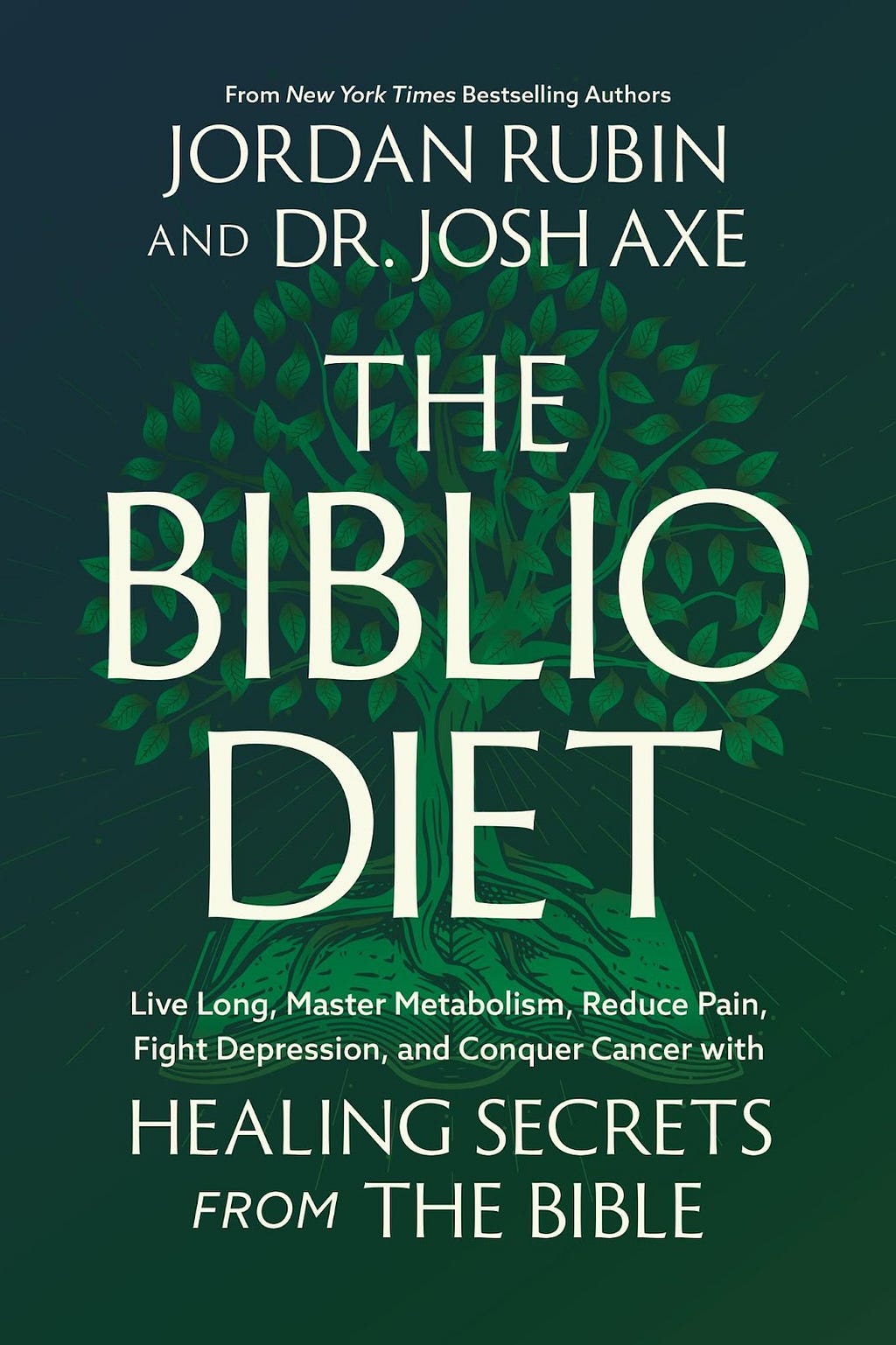
Jordan: Sounds great. If someone wants to visit thebibliodiet.com, I believe, Yitzi, when this runs it’ll be the first week of launch, you can hit a link to order the book or buy it wherever books are sold.
If someone’s interested, chapter 14, Healing Leaves, is available for free. You don’t have to purchase the book at all. Just go to thebibliodiet.com, enter your information, and we’ll send you the digital download. You can share it with anyone in the world because we want everyone to experience this amazing, God-ordained blessing.
All the information is on thebibliodiet.com. And of course, you can follow me on social media, which I just started less than a month ago, Yitzi. I’ve been sitting out all this time. It’s @JordanSRubin on Instagram and all the different platforms where we consistently post biblical health videos.
Yitzi: Jordan, it’s an honor to meet you. I wish you only the best, and I hope we can do this again next year.
Jordan: Thank you. I appreciate it. God bless you. Bye, Yitzi.
Jordan Rubin Talks The Biblio Diet, Regenerative Farming, and the Spiritual Side of Nutrition was originally published in Authority Magazine on Medium, where people are continuing the conversation by highlighting and responding to this story.