Maestro Constantine Orbelian on Resurrecting New York City Opera, The Future of Opera in America and Why Music Is the World’s “True Common Language”

“Music is the international language. Musical communication, I think, is the most important, especially today when people are so isolated. You’re the one who’s touched. You’re the one whose tears are falling. Not someone else’s. It hits your heart, your soul. That’s why live performance is irreplaceable. You feel elevated. Music transcends everything — politics, time, war.”
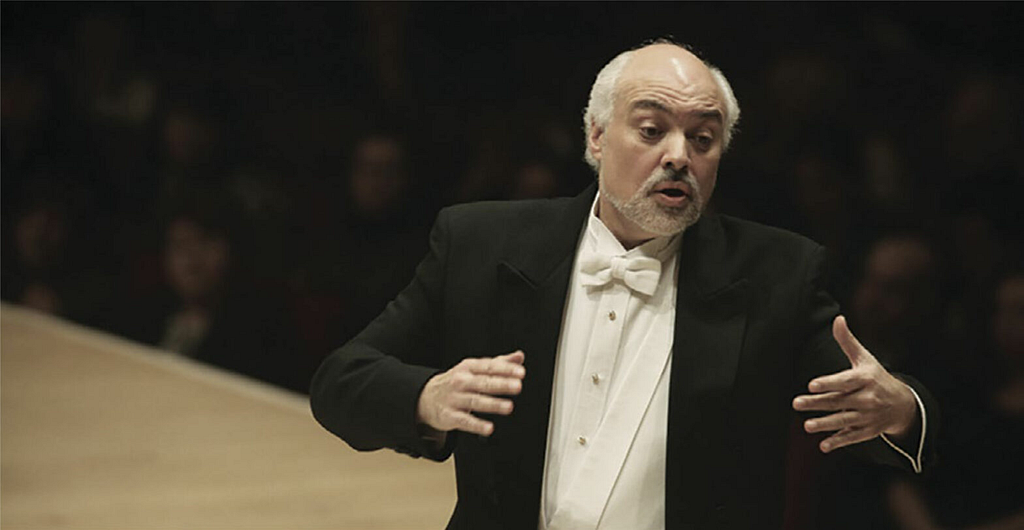
I had the pleasure of talking with Maestro Constantine Orbelian. Maestro Orbelian’s career has always seemed shaped by unlikely turns of history. Born in San Francisco to émigré parents who survived labor and prison camps during World War II, Orbelian grew up under the weight of extraordinary stories. His mother, a Ukrainian doctor, completed medical school just days after Germany invaded the Soviet Union. His father, an Armenian, endured four years in a labor camp before making his way to America. By the time Orbelian was born, his parents had remade their lives on the West Coast. His father began as a janitor at the high-end store Gump’s and, in a matter of years, climbed to the post of vice president.
Music arrived early. Orbelian showed unusual promise at the piano, and his parents, he recalls, “went full Soviet-style” on his training, booking him for five lessons a week from the age of five. He went on to Juilliard, where he studied under the noted pianist Nadia Reisenberg, and made his debut with the San Francisco Symphony at just 11 years old. By 1980, he was a professional concert pianist, signed with Columbia Artists, and performing upward of 150 concerts a year.
The next pivot came unexpectedly. In 1989, Orbelian toured the Soviet Union, performing with the State Chamber Orchestra of the USSR. He returned a year later, and in December 1990 gave a concert at Moscow Conservatory’s storied Great Hall. Only weeks later, the orchestra’s conductor, Andrei Korsakov, died of a heart attack. To Orbelian’s surprise, he was offered the position. “An American with an Armenian last name being offered the leadership of a Soviet state orchestra?” he later said. “It just didn’t make sense. But they were serious.”
That improbable appointment launched his conducting career. For two decades, Orbelian was a fixture in Russia, staging large-scale productions in St. Petersburg palaces and even mounting spectacles on Red Square, broadcast to audiences around the world. Later, he directed the Yerevan Opera in Armenia before becoming principal conductor of the Kaunas City Symphony Orchestra in Lithuania, a post he still holds.
His career has been marked by a knack for unlikely collaborations and serendipitous encounters. He recalls a meeting in New York that led to Anna Netrebko and Dmitri Hvorostovsky performing together on Red Square in 2013, an event watched by some 180 million viewers worldwide. “Things like that just somehow materialize,” he said. “You ask, they say yes, and suddenly you’re on Red Square with two of the world’s biggest stars.”
Orbelian has worked with a wide roster of renowned artists: Renée Fleming, Elīna Garanča, Jonas Kaufmann, Lawrence Brownlee, Sondra Radvanovsky, Isabel Leonard, and even Van Cliburn, who performed his last concert with him. A chance conversation with Fleming in 2017 led her to Armenia for a concert at the Yerevan Opera. Later, he brought her to Kaunas, where she performed to an arena of 10,000.
Now, Orbelian faces what may be his most formidable project: reviving New York City Opera. Once a vital institution that championed American composers and gave careers to stars like Beverly Sills and Plácido Domingo, the company has struggled for years. “Every major city should have more than one viable opera house,” he told me in our interview. “The second house should be accessible to the public and present works that the Met might not do.” He is working to rebuild the company’s board, secure a permanent home, and reintroduce audiences to City Opera’s history of innovation, from English-language productions to the first use of subtitles in U.S. opera.
At the same time, Orbelian continues his work abroad. Earlier this year, he was appointed music director of the Israel Sinfonietta Beer-Sheva, succeeding Maestro Rani Calderon at the end of the 2025 season. His relationship with Israeli musicians and audiences, he says, has been a long time coming. He conducted the Sinfonietta on September 11, 2025, and described the experience as “a wonderful moment of connection.”
His schedule remains relentless. Last year, he conducted a sold-out Rachmaninoff anniversary concert at Carnegie Hall with the chorus of Morgan State University performing in Russian. This past summer, he staged free outdoor operas in New York’s Bryant Park that drew crowds of 7,500 to 8,000. A new recording, with tenor Stephen Costello revisiting songs made famous by Mario Lanza, is set for release in 2026.
Despite decades in the business, Orbelian still insists that the core lesson is simple: never stop learning. He often recalls sitting in on the legendary conducting classes of Ilya Musin in Leningrad in the early ’90s. “He opened up a whole new world for me,” Orbelian told me. “Whenever I’m unsure, I think about what he would say. It was like falling in love with music all over again.”
He talks often about taking risks, setting short-term goals, and remembering that music, at its best, transcends politics. In recent months, he has been candid about the wars that continue to disrupt the lives of people in Ukraine, Armenia, and Israel. “Peace is the most important thing there could possibly be,” he said. “It’s the only way real progress is made. Music is about communication. It’s what brings people together when everything else is pulling them apart.”
For Orbelian, the mission is both deeply personal and global. Whether he’s in Lithuania, Israel, or New York, his focus is on building bridges through music, staging ambitious performances, and keeping the spirit of opera alive for future generations.
Yitzi: Constantine, it’s such an honor to meet you. Before we dive in deep, our readers would love to learn about your personal origin story. Could you share with us the story of your childhood, how you grew up, and the seeds for all the amazing things that have come since then?
Maestro Orbelian: Yes. Well, luckily, my parents met after World War II in Germany. My mother was from Ukraine, my father was Armenian, and they met at a displaced persons camp in 1945 in Ludwigsburg, Germany. My mother was granted a visa in 1948, my father in 1949. My mother was a doctor. She finished medical school in Kharkiv, Ukraine on June 26, 1941, just four days after the Germans attacked the Soviet Union.
It’s a long story with them. They both ended up in prison camps. My father spent four years in a labor camp, and my mother was taken as a doctor to work in the camps. They both survived and eventually came to the United States. My mother arrived in New York first, and my father came a year later. He didn’t like New York, and my mother loaned him — well, I have to qualify the word “loan” — she gave him $50 to take a bus to San Francisco, which is how much it cost at the time.
He became a janitor at a store called Gump’s in San Francisco, which is similar to Tiffany’s, with fine jewelry, crystal, and that kind of thing. Three years later, he became vice president of the company. One of those rare American dream stories that still gives you hope.
I was born in San Francisco in 1956. My parents noticed I was a bit precocious, and the piano became my instrument. They went full Soviet-style on my piano education — five lessons a week. That’s the kind of dedication it takes from parents when they see their child has talent. It’s not the kid dragging himself to lessons at age five.
Anyway, it worked. I ended up going to Juilliard and graduated from there. My teacher was Nadia Reisenberg, who was also a professor at what was then the Rubin Academy in Jerusalem, now called the Jerusalem Academy of Music and Dance. I’m honored to be an honorary fellow of that organization.
I became a concert pianist in 1980 after graduating from Juilliard. I was with Columbia Artists, doing about 150 concerts a year. Then, in 1989, I went on a concert tour in the Soviet Union — 25 concerts in total. One of those concerts was with the State Chamber Orchestra of the USSR. I returned again in 1990, and on December 1st of that year, I performed at the Great Hall of the Moscow Conservatory.
Six weeks later, the conductor, Andrei Korsakov, passed away from a heart attack. It’s one of those things in music — how does a conductor get a job? Well, another conductor has to leave or pass away. In an orchestra of 100 people, there’s only one conductor, so those positions are rare.
I was offered the position of music director, and I thought it was absurd — an American with an Armenian last name being offered the leadership of a Soviet state orchestra? It just didn’t make sense. But they were serious. That’s how my conducting career started. And like most things in life, it happened by accident. There’s always some event that shifts your path, and this one changed my life.
At the same time, I organized a festival in the palaces of St. Petersburg and made some incredible films in those stunning locations. I had a fantastic time. It was a unique period from 1990 to 2010, when the economy was flourishing. I was able to put on huge events on Red Square, broadcast worldwide — the kind of productions you can’t even dream of doing in the U.S. because they’re so expensive.
Eventually, that period came to an end, as most things do. In the meantime, I became the music director, then general director and principal conductor, of the opera house in Yerevan, Armenia. I was there for five years until Covid hit.
Then, in 2012, I became the music director and principal conductor here in Kaunas, Lithuania. I had done a concert with the famous Russian baritone Dmitri Hvorostovsky at the opening of the Žalgiris basketball arena, which seats 15,000. This was in 2012. Can you imagine that now — a Russian singer in Lithuania? But back then, the arena was packed. Hvorostovsky was a huge star and beloved by everyone. Tragically, he passed away in 2017 at just 55 years old from a brain tumor. He was one of the most glorious opera singers in the world and an incredible presence on stage.
After that concert in Kaunas, I accepted the position there when their conductor retired. Then, back in April, something similar happened in Israel, in Beersheba. I was there discussing a project with Opera Israel, and I got a call that their conductor had resigned. They asked if I would take over the next season. I thought, “Holy moly.” But I agreed to help, and I did my first concert there just the other day, on Thursday. It was sold out, and people loved it. It was a wonderful experience.
A few days earlier, the Beersheba Orchestra had done a concert in Modi’in, between Jerusalem and Tel Aviv. I wasn’t conducting that one — it was a tribute to Barbra Streisand. A lovely singer was performing, and just as the sold-out audience sat down, the sirens went off. Everyone’s phones were going crazy, but nobody moved. I looked at my friend and asked, “What’s going on?” He said, “This is a safe building.” I asked, “How safe is safe?” But two minutes later, the sirens stopped, and the concert continued. It’s been quiet since.
Life is an experience, and you have to stay open to it. I’m really happy about everything I’m doing — including, of course, New York City Opera, which is maybe the biggest challenge of all. As we know, in the U.S., government funding isn’t exactly at the top of the priority list. Everything costs millions — opera, orchestra, hall rentals.
Right now, I’m up against this huge challenge of rebuilding the New York City Opera. I’m putting together a great board of directors. I’ve got some fabulous people involved, and I hope we’ll bring it back to its former glory. It was a major player in New York for 80 years. Every major city should have more than one viable opera house. The second house should be accessible to the public and present works that the Met might not do, for various reasons.
City Opera was actually the springboard for many of the great singers we know today — Renée Fleming, Rolando Villazón, Susan Graham, Sam Ramey. Even Plácido Domingo and José Carreras. And of course, Beverly Sills, who was the star of City Opera. In fact, in 1970, City Opera was the first opera company in the U.S. to do a live television broadcast. It wasn’t the Met — it was City Opera. They performed “The Golden Cockerel” by Rimsky-Korsakov, and it was sung in English.
I’m thinking about bringing opera in English back for some productions. I think it opens the door to a different audience — young people, people new to opera. English National Opera in London does everything in English, and people really seem to like it.
Also, City Opera was the first in the U.S. to introduce English subtitles during performances. That’s when they stopped singing everything in English. It was always an innovative place that gave American composers a platform to showcase their work. Many great pieces got their start there.
Right now, I have a lot going on. My relationships in Israel and Lithuania are wonderful, and New York is just an open book of opportunity. I’ve got a huge roster of incredible singers who love working with me. We recently did a couple of major events in Bryant Park. In June, we presented “Opera Goes to Hollywood,” and around 7,500 to 8,000 people showed up for each of the two concerts.
There were even movie stars in the audience. F. Murray Abraham was there, along with actors from “Sex and the City” and others. People don’t realize that opera is all around them in popular culture. In The Godfather, during the wedding scene, they’re singing “Libiamo” from La Traviata. In Moonstruck with Cher, they go to see La Bohème. People hear opera and think, “Oh, I know that!” They just don’t associate it with opera. But once they make the connection, they realize they do know it — and they love it.
Everyone was thrilled with the Bryant Park concerts. We did some Broadway, some musicals — pieces that had been used in films.
Most recently, I recorded a CD of songs made famous by Mario Lanza in his films, with the American superstar tenor Stephen Costello. That’s set to be released in spring 2026. I think it’ll be a big success. All those beautiful songs that Lanza sang in those beloved films — my mother loved them, and so did everyone else. “Be My Love,” for instance, was written by Nicholas Brodszky, a Russian Jew. You’d never guess, right? Just like Irving Berlin.
I was recently at the Luxembourg consulate in New York, which is actually the former home of Irving Berlin. He lived in a gorgeous mansion on Sutton Place. The Luxembourg government bought it from his family. He lived to be over a hundred, and he was originally from Siberia — I didn’t know that!
You learn all kinds of amazing things. Right now, I’m working with many consulates in New York City to prepare programs for the 250th anniversary of the United States. For example, at the Portuguese consulate, we discovered something fascinating. The inscription on the Statue of Liberty — “Give me your tired, your poor” — was written by the wife of King Charles I of England. She was the Queen of England and Portuguese. That’s actually her stanza on the Statue of Liberty. And that’s why we have Queens in New York — Queensboro Bridge, Queens itself — all that stems from her.
You discover so many unexpected things when you start digging into history. It’s all incredibly interesting.
Yitzi: Unbelievable. You’re an amazing storyteller. So, you probably have some amazing stories from your career. And I’m sure it’d be very difficult to narrow it down, but can you share one or two stories that most stand out in your mind from your professional life?
Maestro Orbelian: Oh, I can definitely give you a couple of stories. One that comes to mind happened in Puerto Vallarta, Mexico. This is actually a cute story. I had gone there to visit some friends who have a home there. This was about 15 years ago.
They told me there was a lady they wanted me to meet — someone who lived in this gorgeous house, like a 15-bedroom mansion. They said she was the daughter of a composer. I asked, “What composer?” and they said, “Oh, we can’t remember the name, but she said he was as famous as Tchaikovsky.” I said, “All right, let’s go.”
So we arrive at this beautiful house. There are people greeting me, there’s a mariachi band, and this elegant elderly lady says, “Constantine, it’s so nice to meet you. I’m Yvonne Kálmán, the daughter of Emmerich Kálmán, the operetta composer.”
Now, in my mind, Emmerich Kálmán had died way back, maybe in the 1890s. But it turned out he died in the 1950s, and she was very much part of that legacy. She said, “I need to talk to you. I have a fabulous project.”
Her mother was Russian, from Perm in Siberia, and she had met her father in Budapest. They got married and had three children. Yvonne told me her dream was to have a feature film made about her family. She said, “There’s this superstar soprano named Anna Netrebko. I’m friends with Anna, and she’d love to play the role of my mother in the film. Can you help?”
At that time, I was still working a lot in Russia, and the Ministry of Culture was flush with funding. I told her I’d need something like a treatment — just a two-page outline of the film idea — to take to the ministry. She said she’d have someone contact me about it.
Later, I met in New York with a woman who had written the treatment. I was there with Anna Netrebko’s agent at the time, Jeffrey Vanderveen. The woman gave her pitch, and afterward I turned to Jeffrey and said, “This is never going to happen.” Making a feature film takes five or six months. It’s not something you can squeeze in by canceling a concert or two. And Anna was fully booked — literally every day — for the next 10 years.
So I asked him, “Well, do you think she’d like to sing on Red Square with Dmitri Hvorostovsky?” And he said, “Why hasn’t anyone else thought of that?” I said, “You can ask anyone else, but I’m asking you now.”
He said, “Well, I need to ask her.” I asked, “Where is she?” He said, “Vienna.” I said, “Call her.”
So he called, and she answered. It was 10 a.m. in New York, 4 p.m. in Vienna. He said, “Hi, I’m here with Constantine,” and all that. Then he asked, “Would you like to sing on Red Square?” She said, “Of course I’d love to sing on Red Square.” He asked, “Would you like to sing with Dmitri Hvorostovsky?” She replied, “Well, who else would I sing with?”
So I immediately emailed my producers in Moscow. They wrote back: “Yes, we will do this!”
Right after that meeting, I had lunch with Dmitri Hvorostovsky, who was singing the opening night of Un ballo in maschera at the Met. I said, “Dmitri, would you like to sing on Red Square with Netrebko?” He said, “That’ll never happen.” I said, “I’m not asking if it will happen. I’m asking if you would like to do it.” He said, “Who else would I want to sing with on Red Square?”
Anyway, it happened. That concert took place on June 19, 2013, and it was broadcast worldwide. About 180 million people watched it live. So things like that, they just somehow materialize.
I’ve got so many stories like that. Another one — one day I was conducting in Moscow, and the former general director of New York City Opera came to the concert. Afterward, he asked, “Would you like to be the music director at New York City Opera?” I said, “Is New York City Opera still alive?”
He said, “Yes, we’re just getting back on track now.” This was in 2019. I told him we could talk the next year because I was still employed in Armenia and couldn’t take on another position at that time.
Then, of course, the pandemic changed everything. Like for everyone, it reshuffled my life completely. And that’s how I ended up at New York City Opera.
Yitzi: What happened with the movie? Did that end up getting done?
Maestro Orbelian: No, because she never really had time to do it. At that point, everything kind of shifted. Then all the other things happened — Crimea and this and that — all the stuff that doesn’t need to be written about. It all unfolded, and the movie just got pushed to the back shelf. That was it.
But it would have been a nice idea, because it really would have been a compelling story.
Anyway, all kinds of fun stuff like that. Mainly, for instance, the way I work… Let’s say Renée Fleming had never been to Lithuania. I bumped into her at some point — when was it? It was in 2016. Actually, 2017, in May. There was the 50th anniversary of the Metropolitan Opera at their current building at Lincoln Center.
She says, “Oh, Constantine, I’ve got a week off in Europe. Something got canceled or moved.”
And she goes, “Instead of flying back to the States, can I come to Armenia?”
I said, “Renée, you want to come to Armenia? Sure. What date?”
She said, “October 7, 2017.”
I said, “You’re there.”
I was head of the opera house. Who do I have to ask? Just myself.
So we discussed everything, put it all together. She gave this incredible, miraculous concert. These are the kinds of things that are never going to happen again.
Then I brought her to Kaunas a couple of years ago. She sang at the arena, and we sold 10,000 seats. She had never been to the Baltics.
So anyway, I have a lot of really good, very famous, fabulous friends.
Yitzi: So, you’ve had such a glorious past. Tell us about the exciting new things happening now. What can our readers get involved with?
Maestro Orbelian: Well, we’re resurrecting New York City Opera. I’m actually in deep discussions with the city and state of New York — people like Eric Schneiderman and James Katz. You don’t need to mention those names, but I thought you might know them.
In any case, we’re trying to get a building. We need a home. When I discuss venues like the State Theater, the Koch Theater, or City Center, we’re talking about at least half a million dollars a week in rent.
So when I talk to the musicians’ union about raising fees for the musicians in the New York City Opera Orchestra — which, by the way, is a fabulous orchestra, mostly made up of Metropolitan Opera musicians — it’s important to put that into perspective. Since it’s a part-time gig, people are happy to do something different from what they normally do at the Met.
But I’ll mention to them, “Do you know what the rents are for these places?” And when I tell them, they start tearing out whatever hair they have left. They say, “Oh my God, we used to pay a dollar a year in rent.”
A dollar a year. I’m not even talking about labor costs or anything else. Just the rent. Now it’s half a million or even $850,000 a week. It’s insane.
So we need a home — not that I’ll be able to fill the entire calendar year with New York City Opera projects, but we need a place people recognize as the home of NYCO. We’ll need both a smaller space and a larger one.
One of my board members, Earl C., is a big-time producer, a Black gentleman. He said, “I’ll fill the rest of the dates. Just give me the hall.”
We’ll put in a concession stand, a bar, a restaurant — he’s ready. He produces over 100 concerts a year. He actually has a theater in Bethesda, where we’re also going to be doing performances.
So, you never know. And you’re in Baltimore, right? So here we are.
I actually did a concert for the 150th anniversary of Rachmaninoff at Carnegie Hall. The date was October 21, 2023. I was thinking, what should I do for that, and I had the idea of doing the Rachmaninoff Vespers.
I went to Morgan State, and their chorus came to Carnegie Hall to open the concert. The first two numbers were sung by this all-Black chorus — in Russian.
Every Russian news station with a correspondent in New York was there. I was on Russian television across the board. Only Orbelian, you know — this is what Orbelian says, “Music is the international language,” and so on.
You’ve got this all-Black chorus singing in Russian — it was really kind of amazing. Everybody flipped. The concert was completely sold out.
Rachmaninoff is Rachmaninoff — hugely popular and famous, of course. But it was the chamber music of Rachmaninoff, plus a group of singers, and it was just fabulous.
So, I mean, stuff like that.
Yitzi: Okay, this is our signature question. Constantine, you’ve been blessed with a lot of success, and you must have learned a lot from your experiences. Looking back to when you first started as a music director, as an opera director, or as a conductor — can you share five things you’ve learned that you wish you’d known when you were just starting out?
Maestro Orbelian: Five things.
- First, you never get too old to learn. You have to keep reminding yourself of that. That’s number one. I’ll qualify that by saying, when I was 34 and ended up in Russia in 1990, I didn’t know how to conduct. I fell into this conducting position, and I thought, what am I going to do? So I ended up attending the classes of Ilya Musin, this legendary conducting teacher in Leningrad — well, it was still Leningrad then. Thanks to him, he opened my mind. What’s the exact word… I fell in love with music again. This 90-year-old man, a little teeny guy, what he was able to do with his two hands — it was incredible. The way a conducting class works is with two piano players. You don’t have an orchestra there. He opened up a whole new world for me. It was like a revelation. It was so inspiring that whenever I’m unsure about what to do, I kind of turn my mind to what he would say. There are videos of him on YouTube and all that. I remind myself that if I was able to do it, anyone can. My mother always said, if you want to do it, you’re going to do it. But you have to want to. None of this “push me into it” stuff. Anyway, that’s one thing.
- Secondly, take chances. If you don’t take chances, you’re missing out. Like everything in life, if nobody dies and you fail, it’s still okay, because you learn from failure. It’s difficult to fail, and I can’t say I’ve had a lot of failures. I’ve had a lot of successes. There are probably a couple things I regret — things I agreed to that I shouldn’t have — but still, taking a chance and doing what you truly want to do is extremely important.
- The third thing — again, never stop learning. One thing about being a concert pianist, and it’s the same with being an opera conductor or an orchestral conductor, is that there’s always that one piece you dream of playing. And when it finally happens, and you actually master it — whether it’s the Chopin G Minor Ballade, a Chopin Etude, or whatever — it’s a true feeling of joy and achievement.
- Another lesson I’ve learned is to set short-term goals. When people say, “Oh, this is too big,” I tell them, “No, it’s not.” When you’re studying a piece, don’t look at the whole thing. Just study the first part, then the next, then the next. I’ve done over 150 recordings, and that’s how you do it. In a studio, you stop and start. For instance, when I was recording my CDs in the UK as a concert pianist — the Khachaturian Piano Concerto, the Tchaikovsky Piano Concerto with the Philharmonia of London — you make a mistake, you stop. It’s not a live concert. Just take everything step by step. When you look at the whole picture, it can be overwhelming. But if you do it brick by brick… I mean, can you imagine building the Empire State Building or something like that? It’s done step by step. Don’t put more on your plate than you need to at any given moment. Keep the vision in your mind of the end result, because that’s what’s going to help you build the “building,” whether it’s musical, architectural, operatic — whatever. Keep that vision.
- Another thing — I’m always in awe of composers. When you listen to the music we all love, whether it’s the Tchaikovsky Piano Concerto №1 or La Bohème — how did those composers imagine that and write it down? All this stuff we take for granted. The genius of these composers transcends anything a computer can do. Everyone talks about AI — forget it. When AI writes a piece that gets into people’s souls the way Tchaikovsky or Khachaturian’s “Sabre Dance” does — music that’s played every minute of every day, in ads, in ballets, in films — then we’ll talk. I want to see AI create something that lasts 100 years. Artistically, I mean. I’m not talking about math. Sure, 2 + 2 is 4 — or 5 if you really want it to be — but the level of genius we’re talking about is unimaginable. Take Mozart, for example. He died at 34. Just writing down what he composed — without even composing it — would take 100 years. And if you look at his scores, there are no mistakes. None. It’s not like someone rewrote them later. In the film Amadeus, the Salieri character — F. Murray Abraham’s character — says it: “No mistakes.” How is that even possible? It’s amazing. The genius that a musician has — it’s like reading a book. That’s why I feel so terrible for young people today. They’re not reading Shakespeare. They’re not reading Jane Austen. They think they know it all because they’ve seen something on Instagram, and ten seconds later it’s gone. But reading a great book, playing a great piece of music — that’s your one-on-one chance with genius. It’s a relationship with the composer. There could be 20,000 people in the audience, but it’s your relationship. You’re the one who’s touched. You’re the one whose tears are falling. Not someone else’s. It hits your heart, your soul. Everything is about communication. Musical communication, I think, is the most important, especially today when people are so isolated. Music, a concert hall, opera, seeing things live — those experiences are so important. You can listen to a recording, sure. But being in the ambiance? That’s different. Even just getting dressed — you feel different. Look at you, you’ve got a suit on. You feel different. You’re not in your slippers and shorts. You feel elevated when you go to a concert. It’s an uplifting experience. When we have 7,500 or 8,000 people in the park, standing ovations, and it starts to rain — and nobody leaves — that’s a tribute. Not to me, but to the composers. We did Carmen just last week in the park. The first night it started to rain, and people just pulled out their umbrellas and stayed — for two hours. Two hours. It got pretty bad, but still, they stayed. Some people left, of course, but most stayed. The singers were under a roof onstage at Bryant Park, and we continued. They stayed because music transcends everything — politics, time, war. It has nothing to do with politics. That’s the most important thing. Russian music has nothing to do with today’s president of Russia. American music has nothing to do with today’s president of the United States. Let’s put it that way.

Yitzi: This is our matchmaker question, and it works a lot of the time. We’re very blessed that prominent leaders in entertainment and business read this column. Maybe we could connect you. Is there a person in the world, or in the United States, with whom you’d like to have a power lunch or collaborate with — let’s say, to expand and maximize the New York City Opera? Is there someone you’d like to sit down with? Because we could tag them on social media. Maybe we could help make that happen.
Maestro Orbelian: I would love to meet with the mayor of New York City — whoever that’s going to be in a couple of months. I don’t know when this article’s going to come out, but regardless, it’s very important. When I speak to government officials — people like Schneiderman or others I’ve been on Zooms with — I tell them, look, giving New York City Opera a theater isn’t for me. This is for you.
I’m going to be 70 next year. You don’t have to mention that, but still, by the time everything gets rolling and I pull it all together, who knows where I’ll be. But it’ll look great on your résumés that you helped resurrect New York City Opera. And they say, “Oh, okay,” because you have to let everyone have their two cents. They can see the positive impact of something like this.
So, as far as who I want to meet — it’s the mayor of New York City. I think it would be a great moment for whoever that mayor is to be the one who brings New York City Opera back to life.
Yitzi: This is our final aspirational question. Constantine, because of your amazing work and the platform you’ve built, you’re a person of enormous influence. If you could put out and spread an idea or inspire a movement that would bring the most good to the most people, what would that be?
Maestro Orbelian: A movement? Peace. I think that’s the most important thing. My parents lived through the war — World War II — and we see what’s happening around the world today. My mother was from Ukraine, my father from Armenia. We see the Azeri-Armenian conflict. We see the Russia-Ukraine conflict. We see the Gaza-Israeli conflict. There are all these conflicts, and what good does it do?
At the end of the day, conflicts stop. And what happens? Ruined lives, ruined families, ruined schools, people suffering from PTSD and everything else. Peace is the most important thing there could possibly be. It’s the only way real progress is made — during peacetime. I’m not talking about military developments and the things that get produced because of war. You can hone and refine my answer, but I’m just saying peace is the most important thing. Everyone has to coexist.
You kill one person, another is born. You kill that one, a third is born. You can’t just keep fighting. What for? Are we having children and bringing them into this world just for them to die? No. We want them to live. We want them to live with our principles and the values we believe in, to pass our knowledge on to them.
When people are scattered around the world — millions of them — it’s heartbreaking. I’m in Lithuania right now, and there are around 100,000 Ukrainians here. My cousin is here from Ukraine. She’s been here for the last two and a half years. It’s the saddest thing to see these people. Why?
It’s not a religious conflict. It’s not a language conflict. It’s all nonsense. But these people’s lives are ruined. As an example, my cousin’s daughter came to visit when I was here last time in June. We were in my hotel room, where I am now. Her six-year-old son was sitting with his iPad, doing something, and eventually fell asleep.
It was around 10 p.m., and an ambulance drove by. That kid — he lives in Lviv, in Western Ukraine — is so conditioned that in his sleep, without anyone telling him, he got up in this sleepwalking state, walked over, and lay down in the bathtub. And I just wanted to cry.
For a six-year-old child to hear a siren — an ambulance siren — and instinctively know to go into the bathroom because there are no bomb shelters in Ukraine… No one was building bomb shelters. It’s not like Israel, where I was recently. I was flying out of Ben Gurion Airport on a Saturday morning at 5 a.m., and the sirens went off. Everyone dropped everything at security and ran to the bomb shelter at the airport. Then they came back, finished security, got on the plane, and we left.
But the fact that this is all just matter-of-fact now — it’s incredibly sad. These are horrendous things people are forced to live with.
Getting back to your original question — peace. Peace. People need to leave each other alone. Live and let live.
Yitzi: Maestro Constantine, how can our readers continue to follow your work? How can they attend your performances? How can they support the New York City Opera or support you in any possible way?
Maestro Orbelian: Yes, New York City Opera has a website — NewYorkCityOpera.com. We’re actually revamping it right now. We have a completely new logo and a new look for the website that’s coming soon. Nicole is working on all of that with our team at City Opera.
I have so many people working pro bono, helping me, and it just feels like the right thing to do — bringing New York City Opera back to life. Everyone I speak to, whether they’re from my generation, a bit younger, or older, they all have memories of going to New York City Opera.
Eric Schneiderman, for example — his father was on the board, which is why he’s interested. James Katz from the Attorney General’s office is interested because his parents used to take him to City Opera when he was a kid.
So yes — help, donate, be a partner. We also have a fabulous thrift shop. It’s truly one of the best in New York City. It’s called City Thrift, and it’s located at 513 West 26th Street. The items there are incredible. Right now — we know this interview won’t come out immediately — but we have a fall collection featuring 150 designer hats donated by Mrs. Goodman. They’re all one-of-a-kind pieces — Lagerfeld, Dior, Dolce & Gabbana, and more.
People also donate loads of clothing. Sometimes women donate items they never even wore — the original Bergdorf tags are still on them. We get fabulous pieces, furniture, all kinds of wonderful things. Donating to the thrift shop is one of the easiest ways to support City Opera.
And let’s be honest — kids don’t really want things anymore. Hone and refine how you say this, but they want acrylic, plastic, and convenience. They don’t want to schlep around like our parents did — with the fine china sets, the silver, the crystal glasses. But some people do. It’s interesting.
You donate, you get a big tax deduction, and someone else — often someone from the old world — comes in and finds something meaningful, something their parents didn’t have. So, you never know.
Yitzi: Maestro Constantine, it’s been such a joy and an honor to talk to you. I’ve learned so much, and I’m excited to share the article with our readers. I think it’s going to be a fantastic piece.
Maestro Orbelian: Fantastic. Well, thank you so much. I appreciate your time and your great smile. Thank you.
Yitzi: Thank you, and I wish you a shanah tovah.
Maestro Orbelian: Okay, thank you, and shalom. Take care, my friend. Bye-bye.
Maestro Constantine Orbelian on Resurrecting New York City Opera, The Future of Opera in America… was originally published in Authority Magazine on Medium, where people are continuing the conversation by highlighting and responding to this story.