“Signs Should Speak”: RightHear CEO Idan Meir on AI, Accessibility, and the Future of Inclusive Design
“We asked ourselves, what if those signs could speak? In your own language, at your own pace, directly to your ear. How amazing would that be? Not just for people who are blind or visually impaired, but also for those facing language barriers or reading challenges like dyslexia… That’s what we developed: a talking signage system that speaks to you through your phone.”
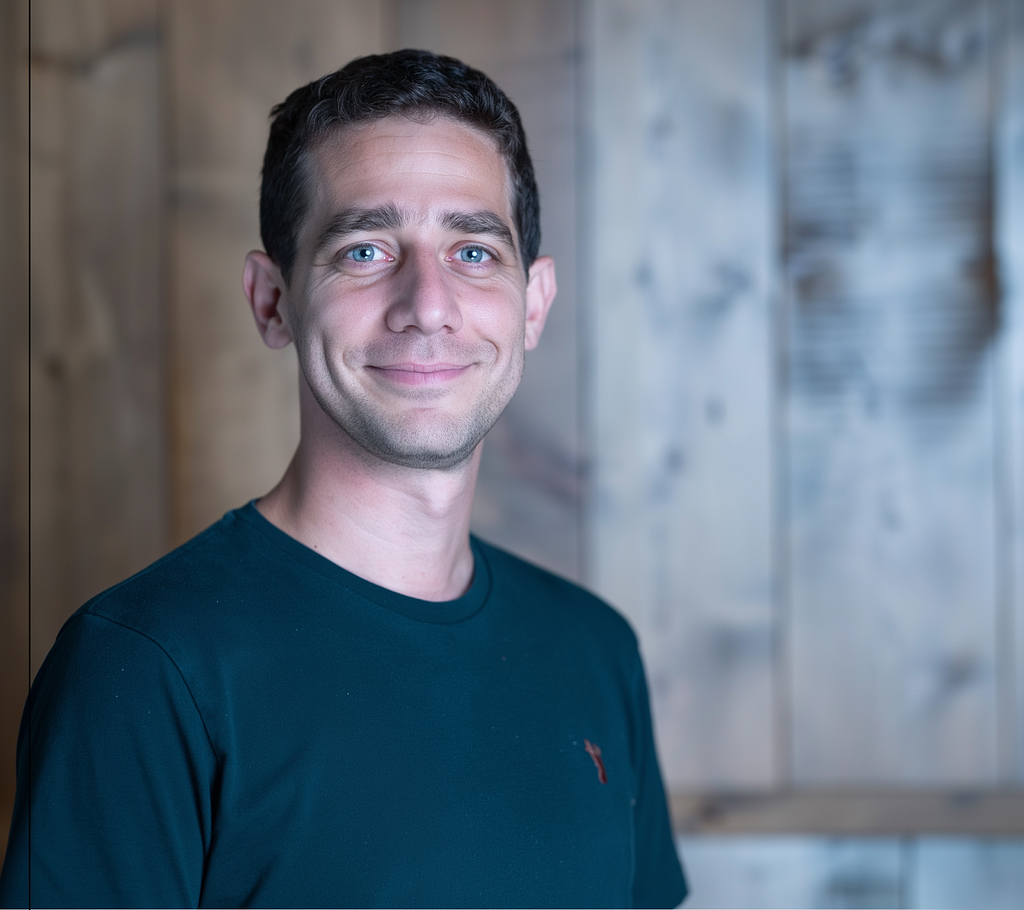
I had the pleasure of talking with Idan Meir. Idan is the co-founder and chief executive of RightHear, a technology company focused on improving accessibility for people who are blind or visually impaired through location-based audio guidance. Based in Rockville, Maryland, RightHear provides an app that turns physical spaces into voice-navigable environments, offering users a sense of orientation and independence in locations such as office buildings, restaurants, parks, and public facilities.
Born and raised in Ra’anana, Israel, Meir has described his early life as shaped in part by a deeply personal challenge: a poor sense of direction. His lifelong difficulty with spatial orientation led to frustration in many areas of life, from military service to travel and day-to-day errands. This personal limitation became a point of connection when he encountered the broader challenges faced by the blind and visually impaired community, many of whom encounter even greater barriers in navigating public environments.
“I’m the guy who always turns left when everyone else turns right,” he has said. “But for someone who’s blind, that disorientation isn’t just frustrating, it’s a barrier to independence.” What began as an attempt to solve his own disorientation problem evolved into a mission to address a structural gap in accessibility tools: the inadequacy of Braille signage as a solution for most visually impaired individuals. According to Meir, roughly 90 percent of blind individuals in the U.S. cannot read Braille, making the tens of millions of Braille signs found in buildings across the country largely ineffective.
Founded in Israel and now operating internationally, RightHear’s core offering is a free mobile app that communicates with voice-enabled digital markers installed in public and private spaces. These markers allow the app to deliver location-specific audio cues directly to users’ smartphones, describing surroundings and offering real-time navigation assistance. Meir’s team recently introduced Markers AI, a visual marker system that can be identified by a smartphone or smart glasses at a distance and from difficult angles, without the need for internet connectivity. The system relays information about nearby objects and their exact location and direction, enhancing orientation for both blind users and others, such as those experiencing language barriers or dyslexia.
The company’s business model is business-to-business, with facility owners and managers paying an annual subscription to make their spaces accessible via RightHear’s technology. End users, primarily members of the blind and visually impaired community, access the app for free. Meir emphasizes that this dual-audience model serves both compliance and customer experience goals for organizations, while also expanding inclusion. “Our goal is to raise the standard,” he has said. “So that whether someone is at a library, a restaurant, a synagogue, or an airport, they can find their way around independently.”
Before founding RightHear, Meir was involved in Israel’s entrepreneurial ecosystem as the founder of Hubanana, a Ra’anana-based startup hub. He holds a bachelor’s degree in psychology and business from The Open University of Israel. In 2020, he and his family relocated to the United States, where he has continued to lead RightHear’s global expansion.
Meir describes his role not only in technical terms but also through the lens of purpose. Reflecting on the meaning of his own name, “Idan” meaning “era” or “time” and “Meir” meaning “bringer of light” in Hebrew, he has framed his work as a kind of mission. “The name translates to ‘an era of bringing light,’ and in some way, I think that’s what we’re trying to do. We’re using technology to bring clarity and independence to people navigating the world.”
The company regularly hosts weekly community meetings on Google Meet, where users and advocates gather to share ideas and feedback. Meir describes these sessions as essential, both for product development and for giving voice to a community often left out of mainstream design conversations. The meetings are open to the public, typically include updates from the company, and provide a space for participants to speak directly about their experiences.
The RightHear platform has been adopted in over 2,500 locations worldwide, including facilities in North America, Europe, and the Middle East. U.S.-based sites include Natural Bridge State Park in Kentucky and the headquarters of Schneider Electric, where a blind employee advocated for the system to be installed to support his daily navigation. “He just wanted to do his job without having to ask someone where the elevator is every day,” Meir said. “That kind of independence is something most people don’t think twice about, but it makes a huge difference.”
As conversations about updating the Americans with Disabilities Act (ADA) continue, Meir believes that digital and audio-based solutions will play a larger role in defining what constitutes effective communication in public spaces. While the ADA requires accessible signage, its heavy reliance on Braille is increasingly seen as outdated. Meir argues that alternatives, like voice navigation, offer a more meaningful form of inclusion. “The spirit of the law is independence and access,” he said. “And we now have better tools to achieve that.”
Looking ahead, Meir has signaled interest in integrating advanced location-awareness features into AI tools, aiming to make digital assistants like ChatGPT more contextually responsive to physical environments. This initiative, currently under development within the company, would allow users to ask environment-specific questions such as, “Where is the nearest exit?” or “How do I book this meeting room?” and receive accurate, real-time answers based on their precise location.
For Meir, accessibility is not only a legal or technical issue, it is a human one. “Independence,” he says, “is not a luxury. It’s a right.”
Yitzi: Idan Meir, it’s a delight and an honor to meet you. Before we dive into our discussion, our readers would love to learn about your personal origin story. Can you share with us the story of your childhood, how you grew up, and the seeds of what led to everything that came afterward?
Idan: Absolutely. My name is Idan Meir. We can talk a little bit about my name in a minute because there’s something interesting I actually learned about it in the past few years. I’m 38 years old, married to Liat, and we have three kids, Abigail, Rani, and Adam. We relocated to the U.S. just three years ago from Israel, from Ra’anana. I grew up in Ra’anana. I used to say I was born, raised, and stuck there, but not anymore. Now I’m in Rockville, Maryland.
I studied business and psychology, and I have horrible orientation skills. I’m that friend who always gets lost, no matter where we go. Like if you’re in a hotel and someone says, “Let’s turn right to go to the dining area,” I’m the one who turns left, even if we were just there a minute ago. I just have no sense of direction, and that’s caused a lot of frustration in my life. I’ve got plenty of stories about it if you’re interested.
When we started RightHear, we thought we could solve the orientation challenges I’ve always faced, and extend that solution to people with even more severe orientation issues, like those who are blind or visually impaired. Eventually, the idea was to help everyone. And that’s really how the story began.
Maybe I’ll talk about RightHear in more depth in a minute, but just from a personal point of view, I started thinking about my name a few years ago. If you know a little Hebrew, “Idan” means “age” or “time,” and “Me’ir” means “bringing light.” I had never thought about it, but someone pointed it out to me: the name “Idan Me’ir” literally means “an age of bringing light.” That felt really powerful to me. It made me feel like this might be part of my mission, my shlichut, to bring light in the form of wayfinding, orientation, and guidance to people who need it.
Yitzi: So beautiful. Please tell us about RightHear.
Idan: Sure. There are two facts I always start with. One is that in the U.S., wherever you go, you’ll find Braille signs. You’ve probably noticed them in elevators, hotel room entrances, public restrooms, really, almost everywhere. There are over 100 million of them.
The second fact, which most people don’t know, is that over 90%, about 95%, of the blind community can’t read Braille at all. Only about one in ten blind individuals can read Braille. And even for those who can, just finding the sign is a challenge. You need to know exactly where it is in order to read it, which isn’t always easy.
And even if you do know Braille and manage to find the sign, you may not want to touch it, especially since COVID. It’s a public surface, and many people prefer to avoid that. So, while Braille signs are widespread, they’re not very effective.
Why are there so many of them? You guessed it, the ADA, the Americans with Disabilities Act. It requires effective communication, and when it was passed nearly 40 years ago, the recommendation for accessible signage was to add Braille. We didn’t have smartphones then, so that became the standard.
But now it’s 2025. Is it still effective? For the most part, no. So we asked ourselves, what if those signs could speak? In your own language, at your own pace, directly to your ear. How amazing would that be? Not just for people who are blind or visually impaired, but also for those facing language barriers or reading challenges like dyslexia. You might see a sign but can’t read it, maybe because it’s not in your language or you’re struggling with the text. How helpful would it be to just hear what’s in front of you?
That’s what we developed: a talking signage system that speaks to you through your phone. It’s a free app, completely anonymous, no sign-in required.
We serve two main audiences. One is the end users, primarily people who are blind or visually impaired, but not only. The second is facilities that care about inclusion, accessibility, ADA compliance, and delivering a great customer experience.
Yitzi: So tell us, what is the business model? Who pays you?
Idan: Facilities do. Our business model is B2B, software as a service. They pay us an annual subscription to make their environments more accessible for everyone. It’s a relatively affordable service. Our goal is to have as many locations as possible because that’s the real change we want to create, raising the standard so that wherever people go, whether it’s a restaurant, airport, museum, library, synagogue, we’ve done those too, or anything in between, they can be independent.
It’s free for end users. We charge facilities an annual subscription. That’s the business model. Simple.
Yitzi: That’s wonderful. So the facility has to reach out to you first? There’s no way for, say, an app with AI recognition to just read a sign on its own?
Idan: First of all, AI is obviously changing a lot, not just in our industry, but across the board. We’ve integrated a lot of AI into our technology as well.
If you ask ChatGPT or any current AI solution, “Where are the restrooms?” you’ll probably get something like, “Restrooms are usually located in…” which isn’t helpful. The reason is that those tools don’t actually know exactly where you are. They might know you’re in Rockville, maybe even which street or building, but not where you are within the building. And they definitely don’t have access to the map of that building.
That’s where we come in. If we’re working with that facility, we have that data. So you can ask AI, as long as it’s integrated with our technology, and get meaningful, location-specific answers. We’re definitely riding the AI wave right now, it’s an incredibly exciting time for us.
One of the proprietary features we’ve developed, and now have a patent on, is not just identifying what something is and where it is, but also giving you precise distance and direction from your current location. As you approach it, it tells you, “You’re 10 feet away, 5 feet, you’ve arrived,” that kind of thing.
Yitzi: So why doesn’t the Americans with Disabilities Act require facilities to have this?
Idan: That’s a wonderful question. We would actually say they do. Technically, the ADA requires effective communication, and facilities that rely solely on Braille signs to meet that requirement may still have a little time to get by with it. But forward-thinking businesses are already implementing better options.
The ADA mandates effective communication. As we discussed, Braille, while valuable, isn’t effective for most of the blind community. It’s great that it’s there, and we’re not against it. But if you’re really trying to meet the spirit of the law, you have to look at better alternatives. That’s what we’re offering, solutions that go beyond the minimum.
I really believe it’s inevitable that there will be amendments to the ADA. Eventually, it’ll require more specific alternatives, like audio formats for signage. Countries like Israel and others have already adopted such standards with talking signs. It’s not in the U.S. law yet, but it’s coming. I think it’s just a matter of time.
Yitzi: Is that what gave you the idea, like the talking crosswalk signs?
Idan: No, actually. When we started, we didn’t know anything about that. We’ve been learning as we go. It’s really been our user base, our community, that’s taught us so much about what’s possible, including the value of audio cues at crosswalks and similar things. But no, that wasn’t what inspired the original idea.
And you know, Yitzi, I didn’t know, probably many of your listeners don’t know either, but how do blind people even use smartphones, right? It’s all one flat surface, no buttons. How do they navigate that?
We didn’t know either. But when we started the company a few years ago, we learned that under the settings in smartphones, there are accessibility features like screen readers that make it possible. And not only are blind individuals using apps, they’re also developing them.
One of our advisors, Adi, is a software engineer who’s been blind since birth. And when we asked him, “What’s the biggest challenge you face at work, either with us or in general?” His answer was, “Finding the elevators in this building.” That really stuck with us.
You’re a software engineer and your biggest challenge is finding the elevator? That’s exactly the kind of problem we’re trying to solve.
Yitzi: What do you need to expand this to every business, every restaurant, every office building? What’s needed?
Idan: Awareness. Awareness, awareness, awareness. More advocacy too. We have a great community that’s grown over the past few years, and they’ve been advocating for this, reaching out to businesses and helping spread the word. More of that is always welcome.
That’s why I’m really grateful to Authority Magazine for giving us this platform. It’s super important and deeply appreciated. We also need more facilities to adopt it and take pride in doing so. I think it’s a great opportunity for them.
As we said earlier, I believe it’s inevitable that every facility will have something like this, not necessarily RightHear, but some version of it, in the next few years. The ones who adopt it early, the pioneers, can really leverage it for their branding, marketing, and public image. So that’s what we need right now.
Yitzi: Unbelievable. Do you ever hope to speak to a key lawmaker to help change the law and require this?
Idan: Yes. Absolutely, yes. And Alex is actually helping a bit with that now. As we approach the 40th anniversary of the ADA, I think it makes total sense to revisit what’s been required and ask, “Does it still serve the purpose today?”
The world has changed dramatically in the last 40 years. We didn’t have the internet back then, or smartphones, or many of the things we now take for granted. So yes, it’s worth taking a fresh look at accessibility through today’s lens.
And this wouldn’t be some huge or unreasonable demand on businesses. It’s a fairly simple thing to implement. You install it once, set it and forget it, and suddenly you’re offering a much more independent and dignified experience for everyone. It’s a smart business move, a smart regulatory move, and honestly, it’s tikkun olam, making the world a better place.
Yitzi: I read that you have a weekly community Google Meet. Tell us about that. Why is it important?
Idan: Yeah, sure. We meet every Friday at 1:00 p.m. Eastern with the community. It’s about a 30-minute meetup. We usually start with five minutes of updates from our side, just to share what’s new. Then there’s a short talk, around 5 to 10 minutes, from someone either within the community or outside of it. The topic isn’t always about wayfinding or even accessibility. It could be about rights, music, or really anything meaningful.
The remaining 20 minutes are open for the community to speak. People share ideas, voice their thoughts, and highlight what matters most to them. It’s a space for them to express themselves and connect with like-minded individuals. Everyone is welcome to join. It’s free, but registration is required. I’d be happy to share the link with anyone who’s interested.
Yitzi: So smart. Would you advocate for other tech companies to do something like that?
Idan: Absolutely. It’s worked really well for us. People want to be heard, and there aren’t many platforms where they truly get that opportunity. Sure, there are lots of places where people can write something, but not as many where they can actually speak and be listened to.
I feel really lucky to be here talking with you, but there are so many people who don’t get that chance, especially those from marginalized communities. We’re giving them a stage and a microphone. It’s not like a webinar where we talk and they just listen. It’s the opposite. We’re there to listen to what they have to say, and they really appreciate that.
I highly recommend this to any startup that has a community, be the ears, not the mouth.
Yitzi: Is it a voice meeting or a video meeting?
Idan: It’s a video meeting on Google Meet. A lot of participants keep their cameras off, but some keep them on. Either way, it’s always fascinating to hear from the community. And it’s not just people from the U.S., we’ve had folks from Europe, Italy, Africa, Israel. It’s really global.
Accessibility crosses borders. As an Israeli company, we’ve received messages and positive feedback from people all over, including a mother of a blind child in Egypt and someone in Iraq. We don’t care about religion, nationality, skin color, none of that. Everyone deserves independence. It’s a human right. And we feel really fortunate to be in a position to help bring that to anyone who can benefit from it.
Yitzi: What do you think could be done to advance the idea of disability inclusion? We have all these different types of inclusion, but it doesn’t feel like disability inclusion or accessibility is really top of mind.
Idan: That’s a great question. I think the key is awareness, just bringing more attention to it. And beyond that, we need to bring more people from the community into positions of influence, to have real seats at the table.
Awareness is important, but not from a place of pity or charity. It should come from recognizing value. I know so many people in the blind community who are incredibly smart, creative, and talented, often more so than I am. The only difference is they don’t see. That’s it. And of course, that idea applies to many other types of disabilities as well.
So I’d encourage people, especially industry leaders, professionals, and those in positions of authority, to take a moment and mentally remove the disability from the equation. Imagine the person in front of you can see, or can hear, or can walk, whatever it may be. Evaluate them for their capabilities, their ideas, their potential. You’ll often be amazed.
We hear stories all the time of people who didn’t even realize someone was blind until much later, because it didn’t matter. It didn’t define them. And I think the more we can let go of those initial assumptions, the more inclusive and equitable the world will become.
Yitzi: Have you been to the Blind Museum in Holon, near Tel Aviv?
Idan: Yes, of course. It’s funny you’re asking. In Israel, we have a team there, and as part of their onboarding, that’s the first thing we do. We send them there.
Yitzi: I was thinking we have to have it in America. You should really do it. You should…
Idan: We should do it together, Yitzi. Let’s do it. I’m serious. I don’t know exactly what it means to do that here, but I’m all in. If you need me, I’m all in. The National Federation of the Blind is in Baltimore. You probably know that. Their headquarters has four or five floors there. We’re in touch with them. They’re not very collaborative, that’s a separate conversation, but they’re there. And there’s the Columbia Lighthouse for the Blind in DC. They’re very collaborative and very active. There are other places too, like in Houston. It probably wouldn’t cost more than $5 million to make something like that, probably less. You really don’t need much for it.
Yitzi: From a commercial perspective, it’s probably very good for you too. When more people understand how important this is, if they’re a business owner or a restaurant owner, they’ll say, “Hey, I could do something like this.” There’s probably some way to partner with it.
Idan: Now you’re blowing my mind with some marketing ideas here. Love it. Yeah, there could be something bold there. Okay, we’ll talk about that.
Yitzi: Beautiful. How do you define the idea of universal design? What does it mean, and how could design become more inclusive?
Idan: Well, in my mind, design is universal unless you’ve failed to make it universal. If you design something well, it is universal. A lot of great design is inherently universal, right? But if you haven’t made it accessible to everyone, then you’ve ended up with non-universal design, or however you’d call it. At its core, I believe design should be universal.
I can give some examples. Maybe I’ll come at it from another angle. A lot of the features and technologies we use today actually started as assistive technologies. For instance, the vibration function on your phone, it was originally developed for people who are hard of hearing. They couldn’t hear the phone ring, so it vibrated. And even then, some couldn’t pick it up because they couldn’t hear the other person.
SMS, text messaging, was also created with that in mind. At the time, people were like, “Why would I text? I can just call.” From a telephone perspective, texting didn’t make sense, unless you couldn’t hear.
Audible, you’re probably familiar with it. Who needed to listen to books? People used to think, “Why would I do that? I can read.” But now, it’s completely mainstream. Listening to books isn’t just for blind or visually impaired people anymore; it’s for everyone.
So, a lot of assistive technologies started that way, created for people with disabilities, and later became universal tools.
Unfortunately, there are still many mainstream solutions that aren’t as universal as they should have been from the beginning. I think if you really pay attention to pain points and design for those, you’ll end up with better solutions for everyone.
In our case, it happened too. We started out thinking about blind users, but we didn’t initially consider language barriers. Adding multiple languages turned out to be really simple for us. And now, if you’re visiting a country where the primary language isn’t English, say Israel or wherever, you can still access the content in your own language. So there you go. We solved it for everyone.
That’s my take on it.
Yitzi: Yeah, another example is subtitles on movies. I actually prefer having them because you can’t always hear everything, and you don’t always understand everything.
Idan: Captions are a great example. I’ll admit, sometimes when I’m in bed at night and want to watch a video, I don’t want to turn the volume up because my wife is sleeping. So, captions, awesome, right? And I’m sure other people use them in different situations too. Good design, by definition, is universal.
I’m especially excited about assistive technologies because they often become mainstream pretty easily.
Yitzi: It’s amazing. Aside from your core product, which helps people who can’t see to hear, are there other solutions you’re working on, other things you’re thinking about?
Idan: Yeah, one of them I’ve mentioned. We call it Rita. It hasn’t been announced yet, so it’s not out there publicly, but I don’t mind if you want to cover it too.
Basically, the idea is, what if ChatGPT had a really good location service? Like we said earlier, if someone asks, “Where are the restrooms?” or “Where’s the cafeteria?” they shouldn’t get a random answer. They should get something contextually relevant to where they are.
Right now, if you ask AI, “Where is…?” you’ll often get something weird or generic. But it could also be more specific, like “How do I book this meeting room?” The AI might respond with “Well, meeting rooms can be booked by…” but that’s not helpful if I’m in a specific office or library. I don’t want to explain, “I’m in this library right now.”
What we’re building is location-aware AI. We’re really excited about it because, again, it’s not just for the blind, it serves everyone.
Yitzi: That’s so smart. It feels like such an obvious thing, but it’s brilliant, just including location in your question. You kind of have that with Google. When you search “restaurant near me,” it figures it out. So bringing that to AI search is great.
Idan: Exactly. You just ask naturally. Whether it’s “Where’s the exit?”, think about that in an emergency, “Where’s the exit?” You really need that answer, fast. Or “Where’s the defibrillator?” or any number of things like that. Or “How do I…” whatever it is.
There are some amazing opportunities to bring this AI wave into real-world use. But our focus as a company is on independent orientation. Part of that is wayfinding. The other part is just understanding your environment, knowing the lay of the land, your surroundings, independently, without needing to rely on anyone else.
Yitzi: As you know, storytelling is one of the most powerful ways to make a sale. Ultimately, we want more locations and businesses to embrace this. Do you have a few stories of how someone who was visually impaired had their life changed because of your product?
Idan: Wow, we have a lot. I’ve got a lot of stories. One that comes to mind right away is from Boston.
Now, I don’t want to say it changed his life, that’s for him to say, but it’s a great example. A blind employee at Schneider Electric, a Fortune 500 company, asked for our solution to be installed at their headquarters so he could navigate the office independently. They listened. They acted on it. They’ve been using our system for the past year, and they’re renewing it now. Clearly, it helps him do his job better and be more effective professionally. Again, I won’t say it changed his life, but he might.
Another story is from Natural Bridge State Park. We have a great video about that. It’s about a man who was losing his sight, he had been fully sighted, and his son asked him, “What are some things you want to keep doing while you still can?” He said, “I want to keep traveling.” After he lost his sight, he asked the park to install our system. They did, and now he can continue exploring that park.
Again, I wouldn’t say it changed his life, but it gave him something powerful. One of our users, Tali, described it best. She said it gave her a sense of freedom. This independence, being able to navigate the world without help, is a kind of freedom we take for granted. We wake up and can see; we don’t think twice about it. But being able to do those basic things on your own, knowing you did it yourself without relying on anyone else, that’s freedom. I love that, and I always stick to the way she expressed it.
Yitzi: Amazing. So how many locations in the US are currently using it?
Idan: In the US, I want to say over 100 now, probably even around 150. Globally, we’re at about 2,500, and we’re growing. More and more places are joining. It’s become a lot easier with our newest technology, Markers AI, which we can talk about soon.
Yitzi: It feels like anyone who’s visually impaired, whether in the US or anywhere in the world, could just go to their employer or a restaurant and say, “I’d love for you to have this.” If you could put words in their mouth, what should they say? Who should they talk to, and how can they make the case compelling?
Idan: First of all, we’ve made it really simple. They can just go to the community page on our website. We have templates, we have addresses, and we offer full support. They don’t need to figure it all out on their own. We’ve thought a lot about how to make sure we’re not putting them in an uncomfortable position with their employer or service provider. Everything is there, just go to our site.
The most important thing to remember is that they’re not asking for a favor. This is not a favor. They’re asking for a basic right, just like anyone else. If they make the request politely, but clearly, framing it as something they genuinely need and that they deserve, most businesses and organizations will listen and act.
And they’re not just doing it for themselves. They’re doing it for many others like them. They’re helping that business serve more people, and they’re not creating a burden. The solution is actually very affordable. For example, a restaurant would pay less than $400 a year. That’s about a dollar a day.
That’s not going to put anyone out of business. In fact, it’s going to bring more people in. Not just the blind or visually impaired community, other people will notice and appreciate it too. They’ll say, “Hey, this business is doing the right thing,” and they’ll want to support it.
So by speaking up, they’re helping themselves, helping the community, and helping the business.
If someone’s reading this and isn’t sure how to go about it, just go to our website, check the community page, or reach out to us directly. We’ll help you. We need this. It’s super important. And that community voice goes so much further than our voice as a company ever could.
Yitzi: Do most countries in the world have a version of the ADA, or is it mostly just western countries?
Idan: Yeah, most western countries have some sort of ADA-equivalent. There’s actually a new one in Europe, I think it’s called the EOA or something like that, I don’t remember the exact acronym. But there’s a new regulation there. Canada also has a relatively new one called AODA.
Yitzi: Yeah, so please tell us about the new AI initiatives you’re working on.
Idan: Yeah, the newest technology we’ve developed, and we’ve filed a patent for it, is called Markers AI. I’ll just share it here. It’s essentially a visual marker, a graphic element, and I’m happy to send you some examples if you want.
Think of it like a QR code on steroids. The reason we say that is because it can be identified by a camera from a much farther distance, about 10 times farther than a regular QR code. There’s no need to focus on it. It can be picked up from a hard angle, even really extreme ones, and very quickly.
Once detected, and I can send you videos to show this, it gives you information about what it is, how far away it is, and in which direction. So a user can scan with their phone or through smart glasses, and it will instantly say something like, “This office, 30 feet, that direction,” or “This restroom is in front of you.” It’s immediate.
Yitzi: That’s amazing. You invented this technology?
Idan: Yes, our team did. Our R&D team is based in Israel.
Yitzi: That’s brilliant. You could use this instead of QR codes, even for people who can see. Scanning a QR code can be frustrating, it’s often at the wrong angle or upside down.
Idan: Exactly. That’s something we’re looking at for future development. QR codes mainly open a URL, that’s their main function. In our case, it’s not about opening a URL. The marker is identified, and then the system shares whatever information we’ve tagged to it.
We’re definitely thinking about applying this more broadly, from a universal design perspective. It could be useful in many other contexts beyond just assisting blind users.
Also, this doesn’t require internet access. There’s no URL involved, so you don’t need to be online. You could be in airplane mode or underground and still pick up the markers instantly.
We just announced this technology this week, so it’s very new. There are probably no articles out yet, hopefully this will be the first one. It’s called Markers AI.
Yitzi: Okay, this is our signature question, our centerpiece question. You’ve built a successful technology company, and you must have learned a lot from your experiences. Looking back on when you first started, can you share five things you think are essential to creating a highly successful technology company?
Idan: Wow. First of all, I feel like we still have a long way to go before I’d call us fully successful, but I’ll take that, thank you. Okay, five things.
- First, take the first step. That’s the biggest one. Every journey starts with that first move. People hesitate too much. They think, “I’m not experienced enough,” or “I don’t know enough yet,” or “I’m not ready.” No, just take that first step.
- Second, you can’t learn entrepreneurship without doing it. This is a field where the only real way to learn is by jumping in. It’s like swimming, you can’t learn to swim without getting in the water. Or walking. Or driving. You have to actually do it. That’s how you learn to build a business.
- Third, niche for the win. People often say, “That market’s too small,” or “There aren’t enough people there to make it worth it.” We heard that all the time when we started, “The blind community isn’t big enough.” But if there’s real pain there, and you put thoughtful energy into solving it, chances are you’ll find a business model. In our case, we’re B2B. Every commercial building is a potential client. So even though the community we serve may seem small, the opportunity isn’t. Don’t overlook the niche.
- Fourth, team. It’s so important to have the right people around you. Yes, AI makes it easier to build things solo now, but the journey is long, stressful, and frustrating at times. Having a partner you trust, like a close friend or someone who feels like family, makes a huge difference. You’re not alone in the marathon. You’ve got someone to share the load with and keep each other accountable.
- And fifth, enjoy it, be passionate about it. If you’re not genuinely obsessed with the problem you’re trying to solve, it’s going to be hard to push through. This has to be more than just about the dollar signs or the potential exit. You have to really care. It should feel like you’re scratching your own itch, or serving a purpose that means something to you. In our case, I think one of our secret ingredients is that what we’re doing feels bigger than the business. It’s tikkun olam, it’s about making the world better. During COVID, we were five years into bootstrapping. We’d grown from two to ten people with no outside capital, and we had real momentum. Then COVID hit. We shrunk back to two. Everyone was quarantined. People told us, “Just shut it down. Every place is closed. And when they reopen, helping the blind will be the last thing on anyone’s mind.” But we couldn’t do that. We thought of Adi, Tali, Karina, Elon, real people we know who rely on what we’re building for their independence. They mattered to us, and we couldn’t just walk away. So, yeah, our secret sauce was that it was always bigger than business. And if you can find something like that, it’s a superpower. It’s what gets you through the low points and brings you back up again.
Yitzi: This is our aspirational question. Idan, because of your amazing work and the platform that you’ve built, you’re a person of enormous influence. If you could spread an idea or inspire a movement that would bring the most amount of good to the most amount of people, what would that be?
Idan: Independence. That would be it, in one word, independence. I think most of us take it for granted far too often. Technology is accessible, especially nowadays. It’s become as accessible as you can imagine from a technological perspective. But we, as a society, are not accessible enough. We don’t understand the importance of it. We’re not taking the actions that are needed. It doesn’t take much, it’s not about big steps, but we’re just not paying enough attention. We don’t care enough. Sometimes, we’re simply not aware.
So I would say, do the small things that can help provide a more independent, equal life experience to those who need it the most.
Yitzi: We’re almost done. This is what we call our matchmaker question. We’re very blessed that prominent leaders read this column, and maybe we could connect you. Is there a person in the United States or in the world you’d like to have a power lunch or breakfast with, or someone you’d like to collaborate with? We could tag them on social media and maybe make it happen. It actually works a lot of the time, people respond. Think of someone who could really open doors for you, someone who could truly change your life if they bought into this.
Idan: (Exhales) Man, I need to think about this. I want to be strategic with this question. You’re hitting the nail on the head here, because we’re actually looking, on or off the record, for strategic advisors to join us. Someone with much more influence than we currently have. When they tweet or speak, people really listen. We want someone like that to be part of this movement and mission. So I want to be thoughtful with my answer. We’re definitely looking for someone like that. You might even have your own ideas or suggestions, since you know who’s in your network. If you’re up for it, think about it and we’ll get back to you.
Yitzi: How can our readers continue to follow your work? How can people who are visually impaired get the app? How can businesses sign up? What can they do?
Idan: We’re as accessible as we can be. First of all, I can send you all the links later, one of them is already in the chat. People can reach us through our website, through email, or even my personal email at idan@right-hear.com. We have a phone number and we’re on all the major social media platforms. We’re most active on LinkedIn, but we’re also on Facebook and others.
We need that engagement. One of the biggest realizations we had over the past three years here in the U.S. is that when a user asks for this, just like the examples I gave before, the dynamic of the conversation is so much better. The hotel or business doesn’t say, “Why would I need this?” They already know they need it because someone asked. Now they’re looking for a solution, rather than being introduced to a problem they might not have even considered.
So yeah, reach out to us on any platform.
One more thought, Yitzi, as a thank-you for this article and the beautiful interview, why don’t we offer your readers something like one free marker, just as a gesture? Maybe for a limited time, we could provide a welcome kit or something of value to all Authority Magazine readers or businesses. We can work out the details, but do you think that would be a good idea?
Yitzi: So nice of you. Yeah, thank you so much. That’s a brilliant idea.
Idan: Alright. We’ve had a few brilliant ideas today!
Yitzi: Thank you so much for this amazing conversation. I wish you continued success, good health, and blessings.
Idan: Appreciate it. Thank you.
“Signs Should Speak”: RightHear CEO Idan Meir on AI, Accessibility, and the Future of Inclusive… was originally published in Authority Magazine on Medium, where people are continuing the conversation by highlighting and responding to this story.