
Te Ao o Hinepehinga on ‘Chief of War,’ Cultural Legacy, and Her Journey from Marae to the Global Stage

“I grew up in a culture — well, in a village — where our stories were sacred. In Polynesia, we’re oral historians. So when you tell a story, you’re not just sharing something beautiful, you’re truly bringing history to life. That’s something sacred, and to be given the gift to tell that, to be trusted to be part of telling that story, was terrifying. It was so scary. I still question whether I was truly worthy of being given that gift, but I just had to work my ass off… I made sure I gave everything.”
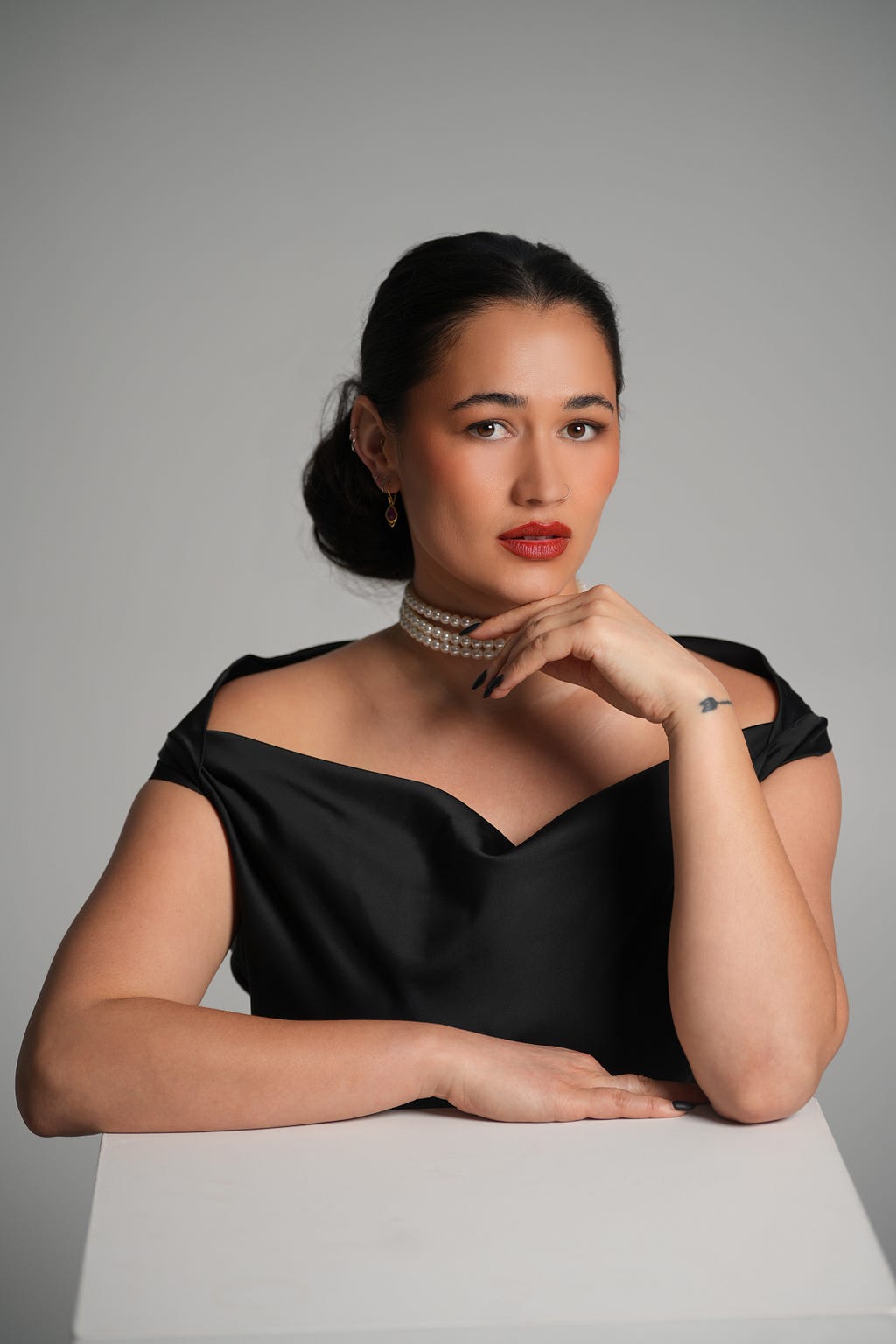
We had the pleasure of talking with Te Ao o Hinepehinga. Te Ao is a New Zealand-born actress of Māori descent whose work in television and theatre reflects both her cultural heritage and her training in performance. Raised in the Te Tairāwhiti region of Aotearoa, she has steadily built a career that bridges indigenous storytelling with contemporary screen roles, culminating in her co-starring role in Chief of War, an Apple TV+ historical drama set to premiere in August 2025.
Born in Gisborne and raised in the villages of Patutae, Muriwai, and later Tolaga Bay, Te Ao grew up immersed in Māori customs and values. Her upbringing took place within a politically active family, including a grandfather involved in national politics, and a wider community dedicated to social development and indigenous advocacy. Much of her childhood was spent in and around the marae, assisting in communal kitchens and participating in Māori cultural life. That early exposure to community service and collective identity left a lasting impression, laying a foundation for her later work both on and off screen.
Te Ao’s first exposure to dramatic performance came unexpectedly during secondary school, when a The teacher introduced a formal drama program. Initially reluctant, she was eventually persuaded to join by her friends and a determined drama teacher. Her first play — a school production of Shakespeare’s Troilus and Cressida — marked a turning point. Encouraged by both her educators and her mother, who championed her ambitions, she decided to pursue the performing arts as a career.
She trained at the National Academy of Singing and Dramatic Arts (NASDA), where she earned a Bachelor of Arts in Performance Art with a focus on musical theatre. During this period, she also worked professionally as a Latin dancer and showgirl in Australia, combining technical skill with live performance experience.
Te Ao made her screen debut with a guest role in the miniseries Black Hands (2020) and subsequently gained national attention as a series regular in Head High, a drama exploring sport and family dynamics in New Zealand. That role proved formative, introducing her to a collaborative production environment that prioritized indigenous narratives and creative autonomy. She has since starred as the lead character in Breakwater (2022), and more recently appeared in Te Rāranga, a series produced in collaboration with the director who first cast her on Head High. Her upcoming role as Kūpūʻohi in Chief of War marks a significant step onto the international stage. The series, which stars Jason Momoa and features actors such as Cliff Curtis and Luciane Buchanan, depicts the unification of the Hawaiian Islands at the turn of the 18th century through the perspective of Native Hawaiian characters. Shot on location in Hawai‘i, the production involved extensive collaboration with Kanaka Maoli cultural experts, and Te Ao has described the experience as one of the most demanding and meaningful of her career.
Though the character of Kūpūʻohi is distinct from her own personality — stoic and measured in contrast to Te Ao’s candid and conversational demeanor — she has noted shared qualities of familial caretaking and emotional strength. The role, she has said, required a high level of cultural responsibility, especially within the context of Polynesian oral storytelling traditions. Outside of acting, Te Ao is involved in initiatives that promote indigenous arts education. She is a founding member of the International Cultural Arts Network (ICAN), which offers free creative workshops across Hawai‘i and New Zealand. The organization, created alongside producers from Chief of War, aims to make performance training accessible to underserved communities and to build pathways for emerging indigenous talent in the entertainment industry.
She is also committed to environmental and cultural preservation, having participated in land protection efforts and protest movements. These efforts echo her family’s longstanding involvement in Māori advocacy and social change, and she frequently returns to Gisborne to reconnect with the land and sea. Her self-described traditional lifestyle includes fishing, diving, baking, and communal food preparation — activities she sees as part of maintaining a relationship with her ancestry.
While much of her work to date has aired primarily in Oceania, Te Ao expresses a growing interest in helping bring Māori and other Polynesian stories to wider global audiences. Her personal outlook — marked by humor, self-awareness, and cultural pride — runs parallel to her professional aims. She continues to speak openly about the challenges and pressures of her industry, while advocating for balance, self-care, and authenticity as guiding principles.
As she prepares for the global release of Chief of War, Te Ao remains engaged with her community and connected to her heritage. Though still early in her career, she has established herself as a voice in both the performing arts and the broader conversation around indigenous representation, working at the intersection of storytelling, activism, and tradition.
Yitzi: Te Ao, it’s a delight and an honor to meet you. Before we dive in, our readers would love to learn about your origin story. Can you share with us the story of your childhood and how you grew up?
Te Ao: It’s lovely to meet you too. Well, we’ll have to go all the way back to the tiny village of Patutahi and Muriwai, which is in Gisborne. Don’t worry, I’ll send that to you so you can spell it. It’s phonetic, so it’s a bit simple. I grew up amongst a couple of different Māori villages. My family has been based on the East Coast since the migration of Māori to Aotearoa, so we have very strong roots and connections there. I was very lucky to be raised in a beautiful, very traditional Māori village. Most of my childhood was spent at the marae, in the kitchen helping my nannies. It was very wholesome. My family spent a lot of time uplifting our community. That’s very much their wheelhouse, their passion, and by extension, I kind of absorbed that as well. You can’t not, when you have such positive influences in your life.
In the small village where I grew up — after we moved to Tolaga Bay — we didn’t have drama class. It’s not exactly a common thing where I’m from. We did a lot of traditional Māori performance, but nothing beyond that. Then we had this incredible woman named Julie Radice come along as our deputy principal, and she ended up offering drama class.
Much to my aversion — because I didn’t really like being the center of attention — my two best friends and my drama teacher coerced me or maybe potentially dragged me (the details are a little foggy), into drama class. And I fell in love.
It was completely unexpected for me, because I was very much the type of kid who spent a lot of time with her head in a book. I’m still quite nerdy even today, so doing performance was really out of my comfort zone. I did kapa haka growing up, which I’ve always loved — that’s Māori performing arts dance — but that was more of a group thing. You weren’t the center of attention. My drama teacher clearly saw something I didn’t. Lo and behold, here I am in this career. She really pushed me to take on lead roles and step out of my comfort zone. I think the first play we did was a Shakespeare play — Troilus and Cressida. After that first performance, I was hooked. I was absolutely hooked. It was like coffee to a teenager. I was never putting that cup down. And from there, it just took off. My mother, bless her beautiful soul, was completely on board. She said, “I’m in. Let’s go. You want to be an actor? We’re not stopping until we see your name in lights.” And we never have. We keep chasing the dream, following opportunities, and it’s taken me to some really incredible places.
Now I’m on the job of a lifetime, standing among a cast of legends. It’s really odd when I think about It is now. It’s bizarre to think one little aversion-prone village kid, who just wanted to spend her days at the library is now acting alongside Jason Momoa, Cliff Curtis, and Temuera Morrison. It’s the stuff of dreams. It really is.
Yitzi: Amazing. That’s an amazing story, and you told it so well. So, if you could tell us about the next chapter, tell us a bit about your first entries into the entertainment industry, your first breaks.
Te Ao: My first job was actually a play I got through drama school. I was studying in Christchurch, and the local theater, The Court Theatre, was doing a production of Cat in the Hat, which is a kids’ show. It was the first time it had ever been done in New Zealand, so they were open to bringing in new talent to uplift the next generation of actors. That was my first job and it was the best. I love Cat in the Hat. I love Dr. Seuss — I mean, we’re talking to a book nerd here. I grew up on those books, so I had the best time. It was exactly the kind of space I wanted to be in.
I love theater. Theater is my first love. It’s where I learned to love acting. Shakespeare is, to this day, one of my favorite writers. I’ve probably read all of his works at least twice now. So that was always the path I thought I’d follow.
But a couple of years later — you know how it is for actors — we chase the dream, we audition, and we never really know when the next job is coming. The next solid job that really changed my career was a TV show called Head High. It’s about the journey of a family and their passion for sports and wanting to become professional rugby players, which is very on-brand for New Zealand. I’ll tell you though, I have never been more scared in my life. My comfort zone is theater. I know theater. I don’t like cameras, which is kind of ridiculous considering my profession. It was really intimidating stepping into that world, but I was so lucky. I walked into an incredible production. People like Tim Worrall and Awanui Simich-Pene were part of it. There were so many amazing artists who had helped build a foundation in the industry where you could tell indigenous stories, where you could be whatever version of yourself you are within Te Ao Māori, within the Māori world, and be celebrated for it.
That was something I didn’t expect, because I honestly didn’t know if that kind of space existed in this industry. I mean, we’re all going through different forms of representation journeys as global communities. When I entered the industry in Aotearoa, I didn’t know what that looked like. So to walk into a show like Head High, to be so supported and cared for — it was incredible. I got to work with Miriama McDowell, and that woman is a game-changer. She’s the most talented woman, and just the most wonderful soul. She played the mother in the show, and she truly cared for us like a mother. She gave me the confidence to explore this side of the industry when I wasn’t sure it was even something I wanted, because it was so different from the dream my mom and I had envisioned all those years ago.
And it’s just never really stopped since then. Thank goodness — because I honestly don’t know what else I would have done it if it hadn’t worked out.
Yitzi: You probably have some amazing stories from different sets you’ve been on, the different projects you’ve worked on, and the people you’ve collaborated with. Can you share with our readers one or two stories that stand out in your mind from your professional life?
Te Ao: Oh, that’s a damn good question. I think Head High was definitely it for me, at least for the first story. It was really important because I was 22 or 23 when I got that job. And like many people at that age, I was still very much discovering who I was as a young adult — what mattered to me, what my value systems were, and what I was willing to stand firm on and fight for.
That’s very much my family’s influence. They’re all changemakers, all working in the social development space. So I was trying to figure out what part of that I wanted to carry into my adult life as an actor. Walking onto that set, I saw so much pride, joy, and love — not only for Te Ao Māori, the Māori world — but also for Te Ao Pākeha, the Western world.
As someone who is both — my father is English and my mother is Māori — it’s an interesting experience trying to figure out where you fit in the world. You’ve got your feet in two different places. That show taught me I didn’t have to choose. Both sides of me make up a whole, and that’s something to be proud of, something to celebrate. I don’t have to pick between my pale-skinned winter coat and the tikanga that raised and uplifted me, the waiata and karakia that are woven into my soul. I could be both, and I could live fully in both worlds.
That show didn’t just teach me that I could do it — it showed me how to do it, especially in an industry where you’re constantly playing make-believe. It’s very easy to lose track of who you are when you’re putting on costumes and diving into dramatic moments. Head High really grounded me and gave me the strength I needed to move forward in this industry with clarity about who I am. That’s a really beautiful thing to figure out early on.
Yitzi: It’s been said that sometimes our mistakes can be our greatest teachers. Do you have a story about a funny mistake you made when you were first starting out in acting, and the lesson you learned from it?
Te Ao: Oh, I’ve made many, many, many mistakes. But we all do, right?
I think… actually, my time management skills. That’s probably the funniest one. I wouldn’t call myself a fairy, but my family often says I’m “away with the fairies,” which usually means I get distracted easily and tend to wander off or lose track of time. At the time, I was young and naive, just living life and exploring everything. But productions are well-oiled, fast-moving machines, and we’re all there to do a job. I see productions like the cogs of a machine, or the engine of a train. Each piece has to move and do its part for the whole thing to keep going. And as much as I love my wandering spirit, this job has taught me that it’s really important to stay focused — not just for your own success or to get the job done, but because you’re part of a team. It’s your responsibility to show up, stay on track, and help the team keep moving forward.
If you ask any of my crew, they’d probably laugh and say, “Oh yes, I remember when I had to chase her down because she wandered off to the beach and was just staring at the ocean.” I got really distracted by dolphins on Chief of War. My poor AD — I swear, she should have slapped me. I probably deserved it a few times.
But it’s dolphins, guys. Dolphins. They’re beautiful!
Yitzi: We love hearing stories where someone who’s a bit further ahead opens a door or creates an opportunity that changes someone else’s career trajectory. Do you have a story where you did that for someone else, or someone did that for you?
Te Ao: Funny you asked that. I could never truly walk away from what my family does, and I’m so inspired by their work. I was really determined to figure out how I could implement that kind of social development approach in my own work. Inspired by my mother, who used to run youth workshops in small towns to create safe spaces for young people to just be themselves, I decided to take that model and start creating creative spaces where young people could explore.
I realized how important it is to create that space because I know, more than anyone, those kinds of resources just aren’t available in rural towns. It’s not something we typically prioritize, and that’s understandable. Life happens, and we have to learn math, English, and science — all very important. But I think there’s real value in creativity and the exploration that comes with it, especially for young people.
Especially today, with social media and constant video content, everything is just pinging our brains with dopamine. I like to believe that by creating these spaces where young people can explore their creative interests, we’re giving them something that’s missing in today’s world. Maybe we’ll find the next great actor, or maybe we’ll just help people feel a little more confident, expressive, and comfortable being themselves.
I’ve been doing this for a few years now. I think it started about five years ago with me and my co-star running summer workshops. Since then, it’s grown into me helping three incredible producers from the Chief of War — Angela Leprete, Brian Keaulana, and Robert Suka (or Uncle Suka) — create what we now call the International Cultural Arts Network. It’s an organization that provides creative learning spaces for people of all ages who feel inspired to explore acting, writing, stunts, and more. A lot of our tutors are working professionals. As someone who’s studied acting in a formal environment, I know how powerful those tools are. But I also know there’s no better place to learn than from people who are doing it every day. Their toolkits are constantly evolving with the industry, so they’re not only great at inspiring others but also at sharing practical tools that really work in today’s environment.
Yitzi: It’s beautiful. So, Te Ao, you have so much impressive work. Please tell us about the exciting new films that are coming out. Maybe even share what you might be working on in the future. We’d love to hear about it and be able to support and watch it.
Te Ao: Thank you. Unfortunately, I’m not sure how you’ll be able to see some of the recent projects I’ve worked on because Aotearoa has a thriving, beautiful industry, but I don’t know how much of it is accessible overseas.
I recently wrapped a show called Te Rāpunga, which, funny enough, was written and directed by my very first director — the one I started this whole journey with on Head High. It really felt like a coming home moment. I shed quite a few tears because it was just like, “We’ve really come full circle, guys.” It felt so serendipitous.
I was acting alongside the guy who played my big brother in Head High and the kid who played my best friend, and we were working with the very director who taught me how to be an actor in front of the camera. It’s a really cool show. It’s edgy, it’s new, and it’s pushing the boundaries of what we typically do here in Aotearoa.
I’m not surprised by Tim — he’s very much a changemaker — but he’s really paving the way with this show. If there’s any series that could show you what Aotearoa is like and how beautiful our natural landscape is, sure, you could watch Lord of the Rings, but I’d say watch Te Rāpunga. Learn a bit of Māori culture. You’ll like it.
Yitzi: So here when you say “Māori,” you roll the R. Is that the proper way to pronounce it?
Te Ao: Yeah, yeah. We have rolled Rs in the Māori language, which I’m learning now is not easy. It’s funny — when you grow up doing it, it just feels natural. But through the amazing work I get to do, I’ve met incredible people from around the world, and I realize, “Oh, okay, it’s kind of like when I try to speak French and have to practice the Rs over and over so I don’t sound silly.” But hey, that’s all part of learning a language, right? You’ve got to be willing to look silly to learn.
Yitzi: Please tell us about the new show Chief of War. Why do we have to watch it?
Te Ao: Chief of War… how do you even describe this show in just a few words? Honestly, I struggle with that because it’s the question everyone wants answered, and it’s the thing we all want to talk about, but it’s such a powerful moment in history. It really is.
I remember growing up and watching Whale Rider come out, and Once Were Warriors. For us, that was a moment of change. We finally got to see our faces on screen and our stories being told. I’ll never forget the feeling of watching Keisha Castle-Hughes walk that stage, representing Paikea, and seeing that story win awards.
This feels like that moment for Hawai‘i. This show is acted, written, produced, and directed by Kanaka — for Kanaka. You don’t get to experience that every day. There aren’t many people in the world who can say, “I got to be a part of making history. I got to witness it being made for the first time.”
If there’s any reason to watch it, watch it for that. There are so few truly unique, first-time moments left in the world. This is one of them. And it’s not something anyone should miss. It’s a good show — like, really good.
Yitzi: What do you hope people take away from the series? What do you hope society gains from it?
Te Ao: I think Jason actually said it best. In the trailer — funny enough, I didn’t even know this line was in there until I heard it — at the very end, the last thing you hear him say is, “No matter what happens to me, remember, this is your home.” And that moment, that line — it just hit me. I got a little teary-eyed even saying it now.
That’s what the show is really about. It’s about being proud of your history. Whether you’re English, French, Italian, Jewish, Pakistani — it doesn’t matter. At the end of the day, be proud of your culture. Be proud of the people who made sacrifices so that you could exist. Because you wouldn’t have the
life or the privileges you have if they hadn’t done the work they did. This show is a reminder to hold strong to your cultural beliefs and values, and to uplift and support those around you who are also on that journey. Because whether you’re Māori or Hawaiian, if you go back far enough, we’re all whānau — we’re all family. We all deserve love, and we all deserve to be proud of who we are and where we come from. And I truly believe we can do that while still supporting those whose beliefs may differ from ours. I think this show is a beautiful opportunity to celebrate that.
Yitzi: It’s amazing. How would you compare and contrast your personal character, Te Ao, with the character you play in the film, Kūpūʻohi. How are you similar and how are you different?
Te Ao: We’re very similar in that — I think my siblings would tell you — I probably do a lot of the wrangling. My sister and I are the wranglers of the family. I wouldn’t say we’re the matriarchs, that role is definitely reserved for my mother, but there’s a certain level of making sure everyone’s where they need to be and have what they need. My friends jokingly called me “the mom of the group” while we were filming, and that feels very Kūpūʻohi. I was feeding everyone too — I’m definitely a feeder. So in that sense, we’re quite alike. But we’re also very different. I think she’s a lot more staunch and wiser in how she reacts to things. She’s experienced enough to know when it’s the right time to stand back and be silent. I don’t have that skill. I’m a chatterbox. My mouth tends to run away from me. I wish I had that calm presence.
She’s just incredibly strong and composed, and I really admire that. A lot of the women in my life — my role models and heroes — are like her, which is where much of that inspiration came from. But I think I need another ten years before I can really embody that kind of strength. Or maybe someone just really needs to piss me off. I don’t know. I’m actually pretty hard to anger. I don’t pop off very often.
But when Kūpūʻohi does, even I get scared. I’m like, “I didn’t know I could make that face.” Turns out, I look like my mother when I do — and her angry face is terrifying.
Yitzi: What has been the most challenging role and most challenging project you’ve taken on so far, and why?
Te Ao: Oh, definitely this job, without a shadow of a doubt. Chief of War is the hardest role I’ve had, the hardest job I’ve ever done. And I feel pretty confident saying that. I know I’m still early in my career, but I really believe it’s the best project I’ll ever do.
It’s a hard thing to take on someone else’s story and tell it authentically. It takes a lot of care and respect. I grew up in a culture — well, in a village — where our stories were sacred. In Polynesia, we’re oral historians. So when you tell a story, you’re not just sharing something beautiful, you’re truly bringing history to life. That’s something sacred, and to be given the gift to tell that, to be trusted to be part of telling that story, was terrifying. It was so scary.
I still question whether I was truly worthy of being given that gift, but I just had to work my ass off. I spent most of the time making sure I was as perfect as I could possibly be, so that when the show came out, there would be no doubt I had given everything — because I did. We all did. Honestly, every single person on the show gave 110 percent of themselves.
That was the only way I could accept the role and the responsibility. I can’t control anyone else, but I can control myself. And I made sure I gave everything. I was exhausted afterward. My goodness. I think I slept for like two months.
Yitzi: Wow. Did the cast bring together Māori, Hawaiian, and Samoan people? Did that feel like some kind of reunion?
Te Ao: It really did. I worked with this incredible director, Tainui, who describes the Polynesian experience in a beautiful way. He says that even though we’re all Polynesian, we’re all different — there’s Tonga, Samoa, so many different islands. And he uses this metaphor: we’re all paddling in the same ocean, but we’re in different waka.
There’s this innate connection that we all have. It’s not very often you see that many different Polynesians on one job, but there were definitely moments when I looked around and thought, yeah, we’re all related. There are so many similarities. I don’t think there’s any doubt that we all came from the same line; we just ended up on different islands.
Yitzi: Do you have a common story, like a shared origin point — maybbe when everyone was in Samoa or something like that? Is there a story you all recognize?
Te Ao: It’s kind of hard to say, because I think it’s all the same story — it’s just the series of events that differ, depending on how people ended up on each island.
We all joke about it. Like, “Oh yeah, we kicked that one off the boat,” or “We left them over there because they liked it more.” Everyone has those kinds of jokes. But no one can truly agree on how we all ended up where we did. We can all agree, though, that we were in the same group of boats, just exploring the waters of the world.
Depending on which island you ask, you’ll get a different version of the story. Personally, I think Hawai‘i’s version is the funniest. I won’t tell it, because I’ll probably mess it up, but if you ever get the chance, ask someone. It’s hilarious.
Yitzi: Maybe this is a naive question, but the costumes you are wearing are so unique and beautiful. They almost remind me of ancient Greece and Rome, even though they’re from a totally different culture. Was there any Roman or Greek influence?
Te Ao: No. Caroline Eselin and Marina Reti, they’re two outstanding designers, and they spent months researching and working with different Kanaka experts to find historical evidence. There are a lot of preserved artifacts, like paintings, drawings, and even some of the capes I got to touch. Oh my God, they were so old, but so fluffy. Everything was sourced from experts who really knew the culture.
Hawai‘i has an incredibly rich group of Kanaka experts who’ve dedicated their lives to preserving this history, and it’s really beautiful. That’s where all of the influence came from.
Though, this is purely my own personal thought — I’ve read the book Sapiens, if you’ve heard of it. It talks about the migration of the Sapien species, and it made me reflect on the similarities between all cultures. That’s why I said what I did about the Chief of War being a celebration of identity. That book really showed me how interconnected we are as a human species. Even though we all have these beautiful, unique cultures and histories, there’s this underlying connection that makes me feel deeply connected to the rest of the world and to every person I meet.
So I wonder if that’s it. I could be totally talking out of my ass here, but I do believe that. Maybe that’s where that feeling comes from.
Yitzi: This is our signature question. So, Te Ao, you’ve been blessed with a lot of success now, and you must have learned a lot from your experience. Can you share five things that you’ve learned that you wish you knew when you first started acting?
Te Ao: Hmm…
Number one: be kind to yourself. You can’t control anyone else, but you can control what’s going on inside. So be kind — always be kind.
Two: if you’re on time, you’re late. If you’re early, you’re on time. I should get that printed on my forehead. Maybe then I’d be on time more often in my life.
Three: never stop learning. It’s the greatest gift life can give you, and it’s the best way to be. There’s always more to learn.
Four: trust your instincts — or in my case, trust the atua. My ancestors have got me, the gods have got me. Just trust, have faith, and take every opportunity that feels right. We’ll figure it out in the end. It might not be clear at first, but we’ll get there.
And five: don’t ever stop having fun. Because why else would you put yourself through this unstable, insane industry if you’re not having fun? I love playing make-believe, and the moment I stop loving it — the moment I stop enjoying dressing up and pretending — is probably the moment I’ll retire. Because what else is there, at least in this industry, if not to have fun? I don’t know about everyone else’s jobs, but that’s what keeps me going.
Yitzi: Can you share the self-care routines that you use to help your body, mind, and heart to thrive?
Te Ao: Oh, that’s a long list. We’re very health-enthusiastic in this house. I say that like I wouldn’t devour an entire box of pizza, I would, but we are pretty healthy.
I think a balance between yoga or Pilates and strength training is something that keeps me grounded. It’s really healthy — there’s all that dopamine and adrenaline pumping through your body. I usually do two to three gym sessions a week minimum, six if I have the time. That could be Pilates or weightlifting, depending on how I’m feeling. It’s a staple, a necessary part of my life. I’ve also recently cut out coffee, which has been… interesting. Coffee withdrawals suck. I know people say that on the internet, but they really don’t hammer in how much it sucks. I’ve replaced my coffee with a bone broth hot chocolate in my very witchy cup — my little cauldron. It’s a mix of cacao powder and anti-inflammatory spices like turmeric, ginger, and cinnamon, and I use bone broth for collagen and gut health. It’s become a staple in my life, and I couldn’t recommend it more. I’d say don’t give up coffee — because that sucks — but definitely add bone broth hot chocolate to your life. Maybe as an evening treat. It’s winter at the moment, so having a cozy cup of something warm that also heals your body and feels like you’re really achieving something. At least that’s what I tell myself. And then, my go-to grounding thing — the one I don’t even think about, I just do — is baking. I’m what we call an emotional baker. When I’m feeling ramped up — excited, sad, angry — I bake. It all tastes good, thankfully. It’s not like that movie where the food absorbs your emotions and everyone feels them. No, no, we’re not magic like that.
I bake quite a bit, and when I’m on jobs, it’s funny because I’ll bake my way through whatever I’m feeling and then bring all these baked goods to set. I’m just handing them out to cast and crew, and they’re like, “Te, what are you doing?” and I’m like, “I don’t know. I needed to bake.” They love it — until one of your co-stars comes up to you like, “Why did you bring chocolate truffles to set? I have a shirtless scene today”. So, sorry guys, but maybe learn some self control. I can always bake more later.
Yitzi: It’s beautiful. Are there any unique perspectives, values, or practices from Māori culture that you’d love to share with the world? Anything you wish more people knew about?
Te Ao: Find yourself a local. If you ever come to Aotearoa, go to a small town and find someone who lives there. I promise, there are so many incredible things to do here, and you’ll find a lot of them online. But there’s a unique experience you get when you connect with a local who lives off the land.
I mean, hey, come find me — I’m in Gisborne. You’ll probably see me wandering around with no shoes and track pants, so I won’t be hard to spot. I’ll show you the real local way. We’ll go to the marae, have a hāngī, go diving for kaimoana (seafood), hunt for our meat, and just have a really good time. That’s the secret to a true Aotearoa experience. Find yourself a local. That’s all I’ll say.
Yitzi: Do you really do that? You dive and catch fish? That’s so cool.
Te Ao: Yeah, I do. When I say traditional, I mean live-off-the-land traditional. We had massive gardens growing up. We fished, we dived, and we hunted. We still do that as much as we can. I don’t live full-time in Gisborne — work doesn’t allow it — but whenever I’m home, I try to get out there as much as possible. Especially in the summer, I’m the first one saying, “Let’s get on the boat. Let’s get some seafood.” I’m such a seafood freak, and it’s the best when it’s fresh. And when you grow up in a paradise like my home, why not get it fresh?
Come, come to Gisborne, I’ll show you. You’ll be fine. You can float, right?

Yitzi: I would totally love to come to New Zealand. Here it’s summer, super hot right now.
Te Ao: Actually, it’s winter here, but thankfully, at the moment, it doesn’t look as bad as usual. Auckland’s weird — really weird. It’s either absolutely miserable or beautifully sunny but freezing cold. It’s kind of like a woman on her period. That’s pretty much Auckland weather.
Yitzi: Does it ever snow?
Te Ao: Not here, unfortunately. I’ve actually never seen snow fall, which is funny because we do have snow in New Zealand. I just haven’t traveled to it yet. The South Island is where it primarily snows, but you can get snow in some places on the North Island too. We’ve got a bit of everything here. The only
thing we don’t have is a desert. Every other natural landscape — you name it, we’ve got it. But yeah, the desert was the one thing that didn’t quite make it to this tiny island.
Yitzi: So this is our final, final aspirational question. Te Ao, because of your amazing work and the platform you’ve built, you’re a person of enormous influence. If you could put out an idea or inspire a movement that would bring the most amount of good to the most amount of people, what would that be?
Te Ao: Oh… I think I’d have to go back to Maslow’s hierarchy of needs: food, water, shelter, love. If there’s one movement I could support, it would be something that makes sure everyone has access to those four pillars. I’m sure there are already movements out there doing that, and if I could put my influence behind all of them, I would. Those are the foundations of what all humans need to find happiness and joy in life. I think the world would be a much nicer place if we all had those things. I think we could handle anything.
Yitzi: One final question — how can our readers continue to follow your work? How can they support you? How can they watch the show?
Te Ao: If you have access to any streaming services that carry work from Aotearoa, please, please, please watch it. I might not always be in it, but tautoko our industry — support the work coming out of Aotearoa. We’ve got nothing but beautiful stories, and hey, who knows, maybe you’ll spot me in one of them.
I’d say Instagram, but honestly, I’m terrible at it, so I’ll set the bar low.
Yitzi: It’s beautiful. Te Ao, it’s such a delight to meet you. I wish you continued success, good health, and blessings. And I hope we can do this again next year.
Te Ao: Thank you. Yes, it’s been lovely to talk to you. This has been such an awesome conversation. I really appreciate your time.
Yitzi: It’s my pleasure.
Te Ao: Thank you. Have the best evening, and thank you so much again for chatting. It was really lovely.
Te Ao o Hinepehinga on ‘Chief of War,’ Cultural Legacy, and Her Journey from Marae to the Global… was originally published in Authority Magazine on Medium, where people are continuing the conversation by highlighting and responding to this story.